February 9, 2025
Dear Friends and Family,
The past couple of weeks have been strange and difficult. The aggressive dismantling of USAID and US foreign aid have been particularly shocking to Peace Corps Volunteers. We see the impact of foreign aid and we are ourselves foreign aid. Much of this week, I was anxiously awaiting a phone call which would order me to return to the US. So far, we seem to have avoided that. But our work on the ground is shifting under foot.
All Peace Corps Volunteers have been ordered to pause any work on their grant-funded projects. This includes the type of grant I am working on (Peace Corps Community Partnership) which is essentially a Peace Corps-sanctioned fundraiser. Other types of grants are funded through various federal agencies. In many African posts, Peace Corps Health Volunteers’ daily work is supported through PEPFAR which provides life-saving drugs to HIV-infected patients. This is not the case for Togo volunteers. But we were going to launch new partnerships and funding with the President’s Malaria Fund and the Environmental Protection Agency. All of which are on pause now.
We are being asked to tailor our language and activities. For example, the Climate Change and Food Security Committee (of which I am a member and Secretary) has had its name changed to Food Security Committee. We develop resources and organize projects for volunteers in every sector (Health, Education, and Agriculture). How exactly the elimination of “climate change” from our name will impact our work is unclear. Gender-equity promotion is built into our English Education program. But we are now being asked to limit discussion of gender. Promoting climate-resistant crops and climate-smart farming practices is part of the Agriculture program. Our program plans and goals are developed alongside Togolese Ministries of Education, Health, Agriculture, and the Environment. It’s unclear how much we can change in our programming without the consent of the Togolese government.
Our post staff, like Peace Corps Volunteers, are worried and saddened as well. (Although it seems like our new Director is encouraging them and keeping things positive.) You may not know, but US agencies abroad from the Peace Corps, to USAID, to our embassies hire a lot of local staff. Local staff keep these organizations running. For example, Peace Corps Togo has three Americans working there, all of whom are in the top leadership positions. Everyone else, my program manager, my doctors, all of our drivers safety officers, and more are Togolese people. Their labor rights and protections are different from US-citizens working abroad.
We had a online town hall meeting on Friday to discuss all of this with our new Country Director. (I do not envy having this as her first couple weeks of work.) She encouraged us to remain optimistic and explained the essential strategy here: lay low, be compliant with Executive Orders and Presidential Memorandum, and essentially don’t rock the boat. There’s arguments for and against this strategy. It’s true, if little attention is drawn to the Peace Corps perhaps we will avoid the wholesale dismantling other agencies have faced. On the other hand, how can an agency whose goal is to promote global peace and friendship be compliant with an order to create a foreign policy in line with Trump’s views which are clearly antithetical to peace and friendship? The second goal of Peace Corps is to “promote a better understanding of Americans on behalf of the people served.” What understanding of Americans would you like folks abroad to have?

Good things have also happened in these weeks. The strangest part of this period has been switching from doom-scrolling and anxious phone calls to other volunteers, to simply being in my village and doing the good work. I’ll just share some highlights:
- The cashew trees are just beginning to fruit. I walk through part of the chief’s orchard to get to my water pump. They smell like a mix of jasmine and apples
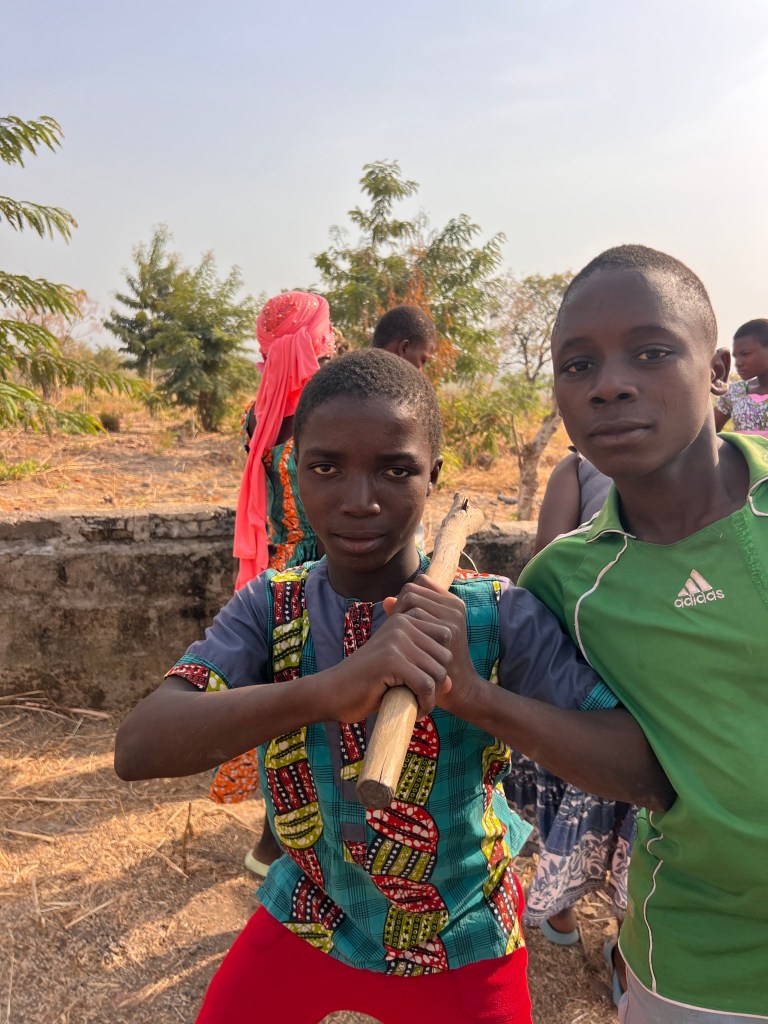
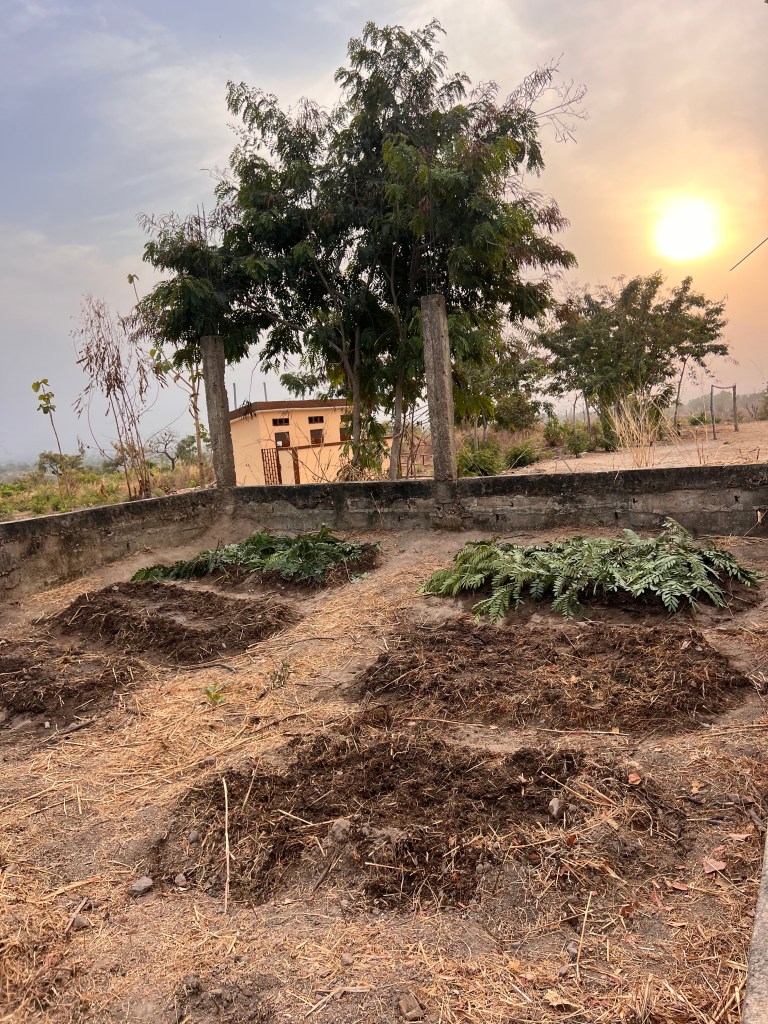
- My students have begun their school garden. They’re so excited. (And they’re much more fun to teach when we’re all outside working together).
- The Vice Principal of our middle school has taken a much more active role in the school garden this year. His support is so helpful and appreciated.
- A lady who took part in my soy bean transformation training led her own training this week! She taught a group of ten women and two men how to make and can tomato paste. It was awesome. And so inspiring and reassuring to see community members take on training each other. We’re planning how we can have some of the women retrain new groups of people on viande du soja and soy milk production
- The little zucchini plants in my garden seem very happy. The garden overall is not thriving as much as last year, but I’ve had less time to devote to it.
- My English clubs have been having a grand old time looking through my children’s atlas of the US. Switching between the image of New England woods to the rivers and Rocky Mountains of the Mountain States creates a very satisfying gasp from the students. Thank you to Mrs Anderson, my second grade teacher, who gave the atlas to me all those years ago.
- Zorro’s rabies titular test came back in the correct range, so he is one step closer to coming home to the US with me! All that’s left is filling out a form or two and buying his place on the plane.
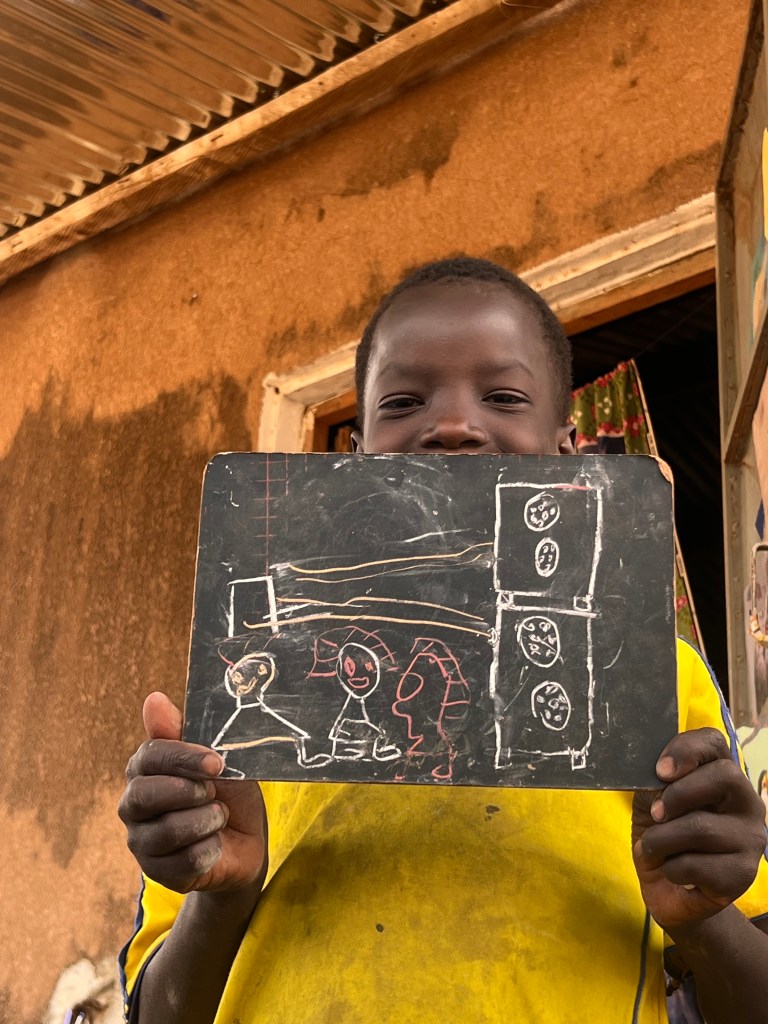
- The kiddos have been piling in to draw in the coloring books and sticker-by-number
- Ian McEwan’s novel Saturday may be pulling me out of my reading slump at last.
- I am beginning to hear back from graduate schools and so my plans are beginning to take shape. I am still in an uncomfortable limbo but hopefully by March my plan will be formed.
- I got to visit Paul & Sue’s village for a weekend. It was lovely (as always) to spend time with them. And, it’s so interesting to just see another village and another Peace Corps experience.
- Zorro is ever the serious and loving guardian of my house.

Before I close this letter, I want to share some thoughts on another topic close to my heart: immigration. People in the US are embracing an extreme and dehumanizing language around immigrants. The racism is so overt I am surprised anyone is bothering to cover it up. At the same time that I see this language in social media and hear about it in the news, I am surrounded by hopeful potential Americans. At least once a week, someone here asks me to take them to America. Sometimes this is a funny teasing — we try to decide how they could fold themselves into a suitcase, or how rich I would have to become to buy an airplane to take the whole village with me. Often its a true request. People are hopeful that I somehow know someone at the US Embassy or I know someone who would give them a job that would support a visa.
West Africans are the most fervent believers in the American Dream I have ever seen. They want nothing more than to work hard in the land of opportunity. The would give up ancestral land, deeply interwoven kinship and support networks, the opportunity to see their nieces, nephews, and own children grow up, their ceremonies, and their rites of passage in order for a shot at the American Dream. People here have an entrepreneurial spirit; creative and clever, when they immigrate they create new businesses, revitalize neighborhoods, and create opportunity for others. The “American Brothers” who come back to visit their families in Togo build homes to support their elders and community. Folks who may be working long thankless hours in Tyson Chicken Plants in the Midwest, come to visit Togo to sing the praises of the United States. Many Togolese look forward to the chance to serve in the US Military to earn their way to citizenship. Just think through that for a minute. Have you ever spent years toiling away, risking your life, for the chance to simply belong somewhere?
When the news in the US is rapid and chaotic, the American gaze can focus inward even more than usual. We doom scroll. Our fears are stoked. We panic. And, in a fit of frustration we can turn off the news entirely and seek escape. For people like myself, Americans living abroad, Americans whose communities and friendships are not limited by national boundaries, the experience is similar but distorted — stretched to contain an insider and outsider perspective.
From my vantage point, I have a few things I would encourage us all to do: Approach each other with empathy and compassion. Think critically. Reflect on how people in power are urging you towards certain emotions. Consider how far you would go to protect your family from persecution, extreme poverty, and war. Consider the cruelty and injustice of someone mocking and doubting those sacrifices.
With love from Togo,
Janet





 Janet goes places, sees things
Leave a reply to Lisa Tribuzio Cancel reply