Dear Family and Friends,
I appreciated your responses from my last letter. Your engagement was a reminder that although we know the world is interconnected, its rare that we have the opportunity to look closely at those connections. I am beginning to view cultural exchange not simply as something I enjoy doing, but rather as a duty.
At an organizational level, Peace Corps Togo has not had any major changes (for good or ill) since I last wrote. The reinstatement of the Mexico City Policy is applicable to Peace Corps. But it has little effect on our NGO partnerships because abortion is illegal in Togo. (I do worry about the consequences of that policy in a wider context.) Some other posts in Africa are receiving new restrictions, such as orders to stop leading community health talks on HIV-prevention.
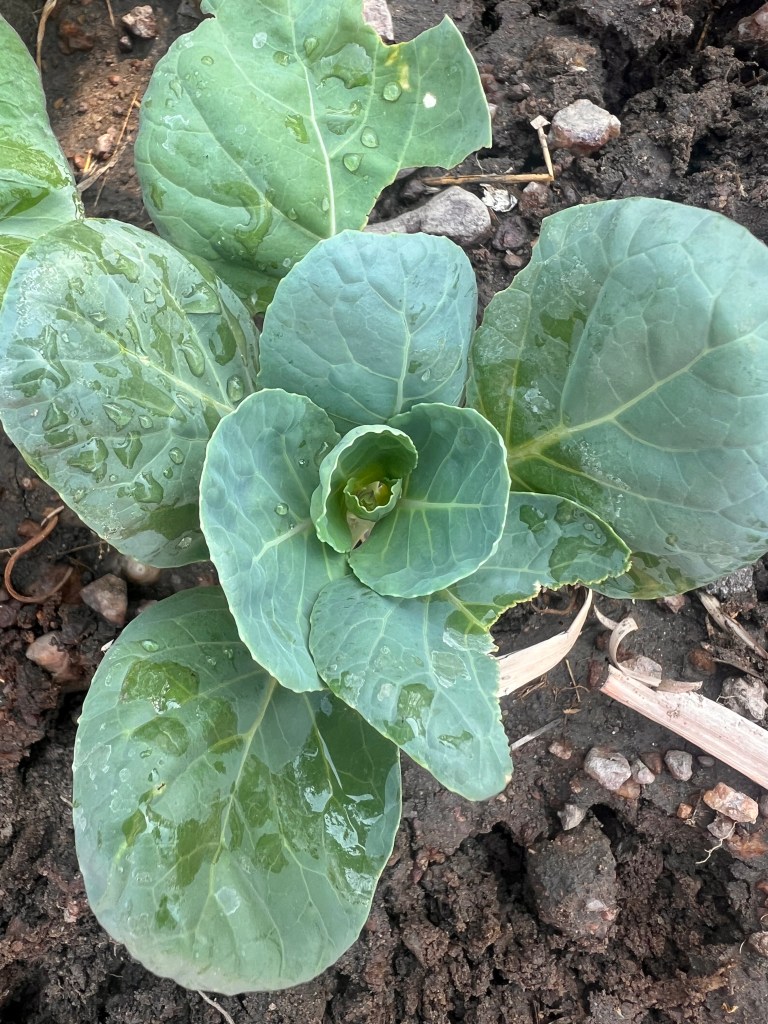
Peace Corps Togo seems to have reached an equilibrium. So, I have been able to lean into my work and ponder the world in a slightly more relaxed manner. The nursery plots in our school garden are growing little shoots. I am making plans for a tree nursery once the garden is well established. My English club students are getting really good at playing hangman. I insist that they say the letters in the English alphabet rather than the French alphabet. Very slowly the sounds of frustration have lessened when I write “E” when they wanted “I”.
I have been pecking at the opening chapters of a pile of books, consuming too much news, and pondering the value of cultural exchange. What draws me to write these letters home? What encourages me to talk to my students about Thanksgiving, the Rocky Mountains, my family tree, snow drifts as high as a house, and American cities with restaurants serving food from every corner of the world? Why are strangers in the market so eager to share their opinion on America with me?
These pondering have lately been tangled up with the question that has chased me since I applied for Peace Corps: what does it mean to work for a government whose actions you do not fully support?
A cynic would tell you that Peace Corps s a band-aid PR strategy for the US’s insatiable desire for military invasions, sponsored coups, and economic imperialism. Before I left for Togo, if I considered only the view from above, a Risk board set for the grand sweep, I could understand the cynics point of view. I could see a puppeteer’s hands working away at the common man’s mindset. But the cynic’s view is narrow and angry. It’s tone is not only demeaning, but dehumanizing. I can acknowledge that the image of Peace Corps could be used and stretched to fit a politicians interest. Politics is often a game of image manipulation.
I made choices to ease my wariness of working for the US government. First, I set aside any notion of representing the US government and instead I happily took on the burden of representing American people. (A more challenging task, perhaps, but one I could take on honestly). Second, I chose to trust in my own work, my own intentions, and my own commitment to service.
Now, the Risk board has been kicked over in a temper tantrum; the puppeteers strings ripped out and replaced with a far less subtle form of theater. Someone has taken a sharpie to a few place names and another seems to be blindly hacking at our little plastic soldiers with a glittery chainsaw. The question rises again, sharper, how do you work for a government whose actions you oppose?
I remember the choices I have made and I choose them again in a new context. I’ve been reflecting on the story of Peace Corps Volunteers in the Dominican Republic in 1965. When the US government backed a coup against the newly elected Dominican president, the Volunteers refused to be evacuated. Stanley Meiser describes in When the World Calls: The Inside Story of the Peace Corps and its First Fifty Years that as US Marines flooded the island they found themselves on the opposite side of barricades from their compatriots in the Peace Corps. When crisis hit, Volunteers reorganized and recommitted themselves. They continued their work in healthcare and were so widely respected they were the only Americans allowed to move freely in the island. Regardless of the demands and desires of Washington D.C. their community had expanded beyond a national identity.
Friendship and community are at the heart of the Peace Corps experience. Peter Hessler wrote elegantly about the value of friendship in his article on the closure of Peace Corps China for The New Yorker. Although China and the US are entangled economically and politically, the average Chinese person and average American person rarely have the chance to know each other. Hessler’s service allowed him two years’ worth of opportunity for conversation. His career as a writer allowed this conversation to expand well beyond himself.
An American who sees beyond and through generalizations and stereotypes does not make for an easily malleable political subject; they do, however, make for a better American.
In truth, Peace Corps may more often be more of a headache than a salve for Washington D.C.. Politicians love to talk on about “American values”: hard work, bravery, neighborliness, service, prioritization of family, and steadfastness. Acting on those values put Volunteers in conflict with the US Marines in 1965. Oddly enough, acting on “American values” can rankle talking heads who love to laud those same values.
And Volunteers only strengthen those values in themselves and their communities (home and host). Of course, Peace Corps is not unique in shaping people to be community-focused, service-minded, resilient, empathetic, and brave. Nor is it a guarantee: you could enter the Peace Corps narrow-minded and self-centered and leave the same if you are stubborn enough. But whether it be Peace Corps, travel, or any other act of stepping beyond your home, if you leave with the intention to connect with others, to be kind, curious, and helpful, you will be formed anew.
I will carry home the practices of community-building and service I have honed here. I hope that by sharing my stories with you all, you may also be a bit more open, more curious, and more likely to say hello to the stranger.
With love from Togo,
Janet
P.S. This marks my second letter in a row full of musings and theory. So, I will add a couple of updates.
- While many of you in the US seem to be caught in one blizzard after another, I am once again googling “does the heat make you stupid?” (It does. It slows how fast neurons fire.) The heat is overwhelming at times, but also provides a perfect excuse to nap under the mango tree or lazily listen to audiobooks on the porch.
- Last weekend I celebrated Gal-entine’s Day with a great set of fellow volunteers. Staying at a hotel with a pool and air conditioning was the height of luxury.
- My friends in the Koukoude neighborhood (where my water pump and garden project is located) took me to see the spring the neighborhood used as its first source of water. Takougnandi and the neighborhood chief were laughing away describing their boyhood comedies of bringing home water from such a distance.
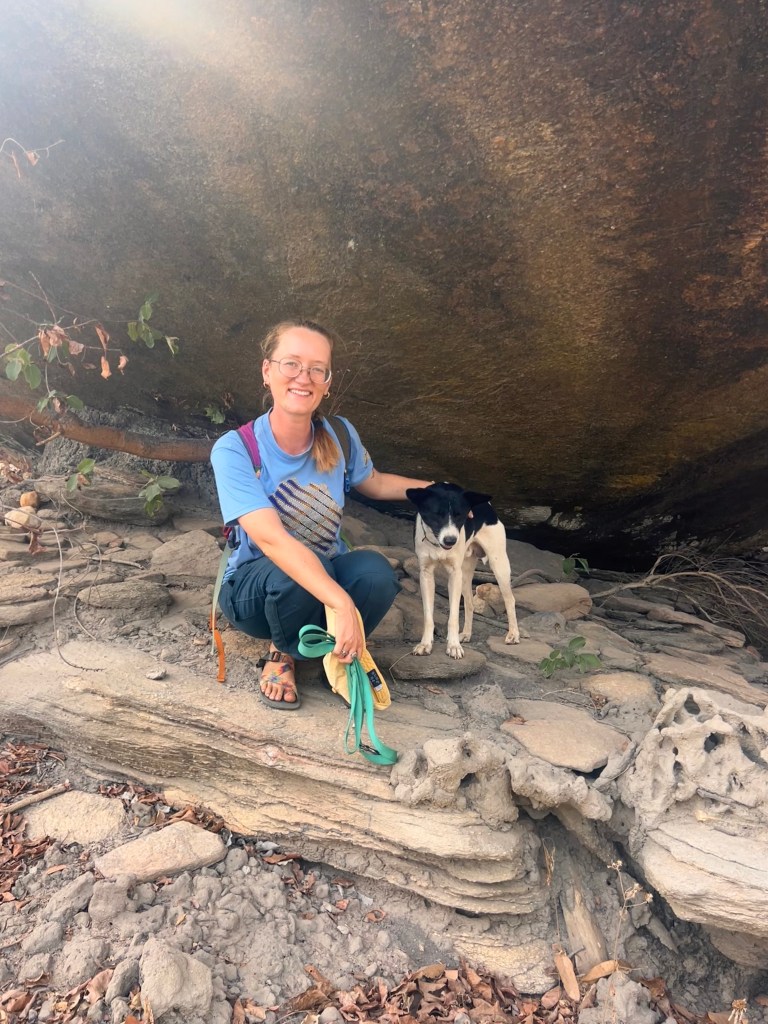
- Takougnandi also showed me some large rock formations he hopes one day could be a tourist attraction. The rocks were very cool — if you ever want to lead a group through rural northern Togo and see some beautiful landscapes, let me know!
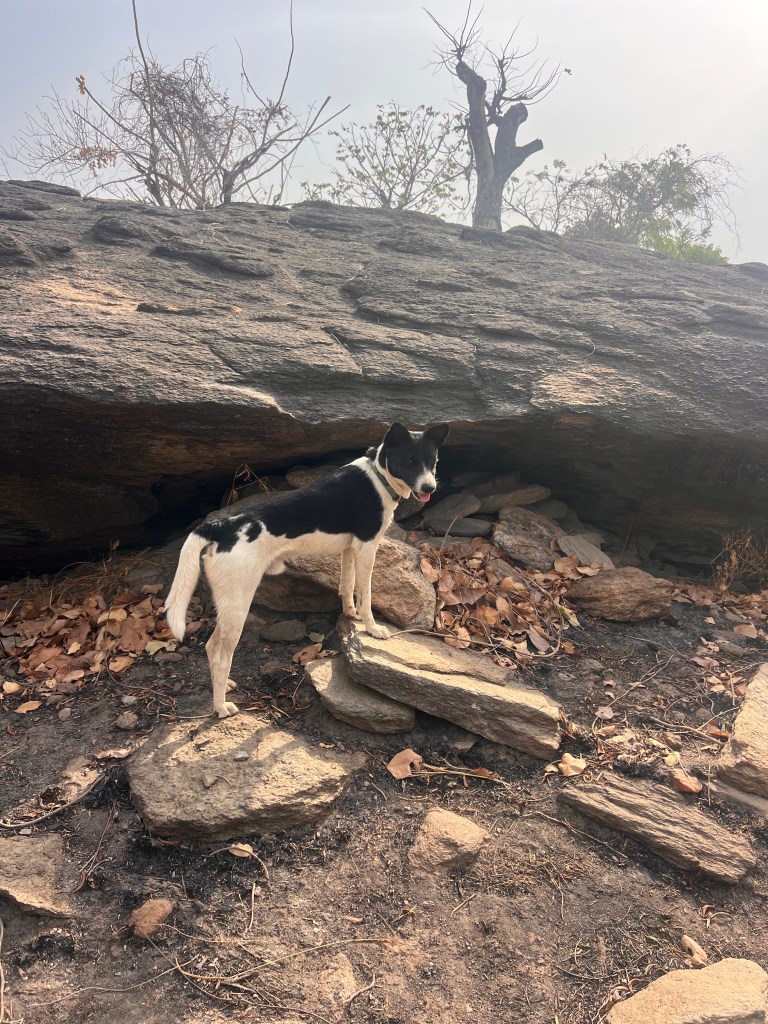
- I also saw a lot of the village this week because of Zorro. He was a very bad dog who ran off for more than 24-hours. I saw miles more of the village than I ever had before — while I was distraught, crying, and sure my dog was dead. But still, it was beautiful. On the back of the motorcycle and while walking through fields and bush, I was taken aback at the vastness of the land, picking out little homesteads off of winding paths between the tall rushes. I am very luck to live in a beautiful place.
- And I’m very lucky that Zorro is safely home. He seems to have only been off on an adventure. Why did he want to add more emotional stress to my life? We may never know. But, he is shocked to learn his actions have consequences. His howls from behind the gates of the porch sound like a particularly pitiful rendition of “Don’t Fence me in”
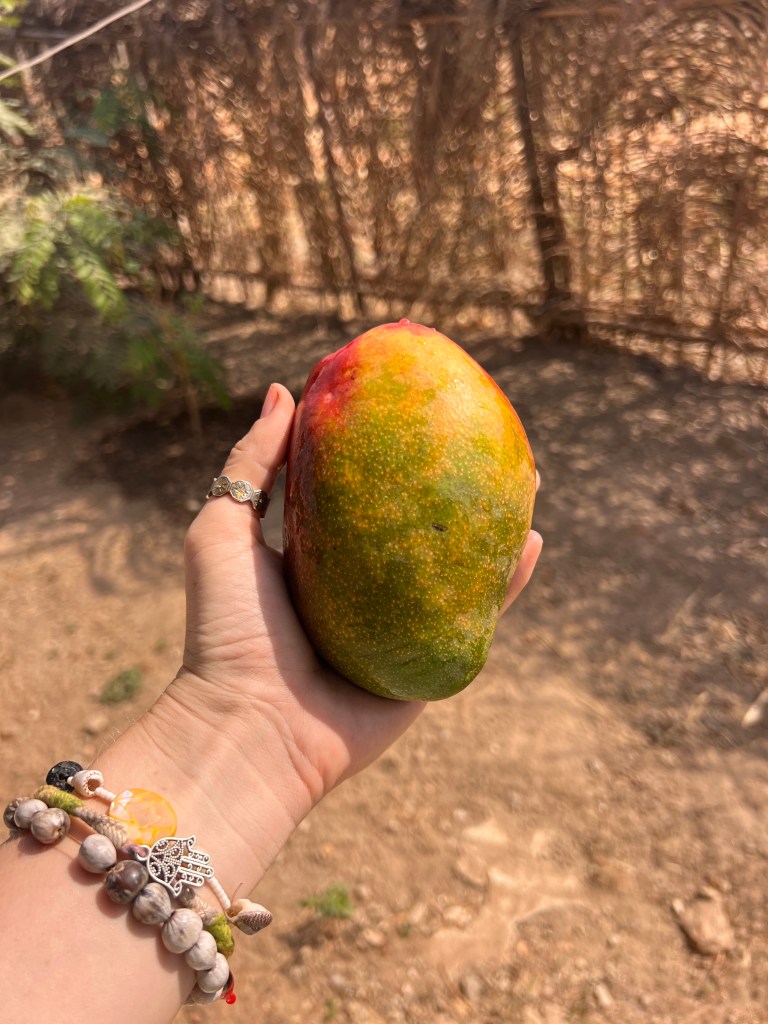
- Mango season is arriving! My first mango came as a gift from a student (very sweet). I bought a bunch more in Sokode and brought them back. Our mangos are still green here so my host mom and I had a real treat eating them on my return.
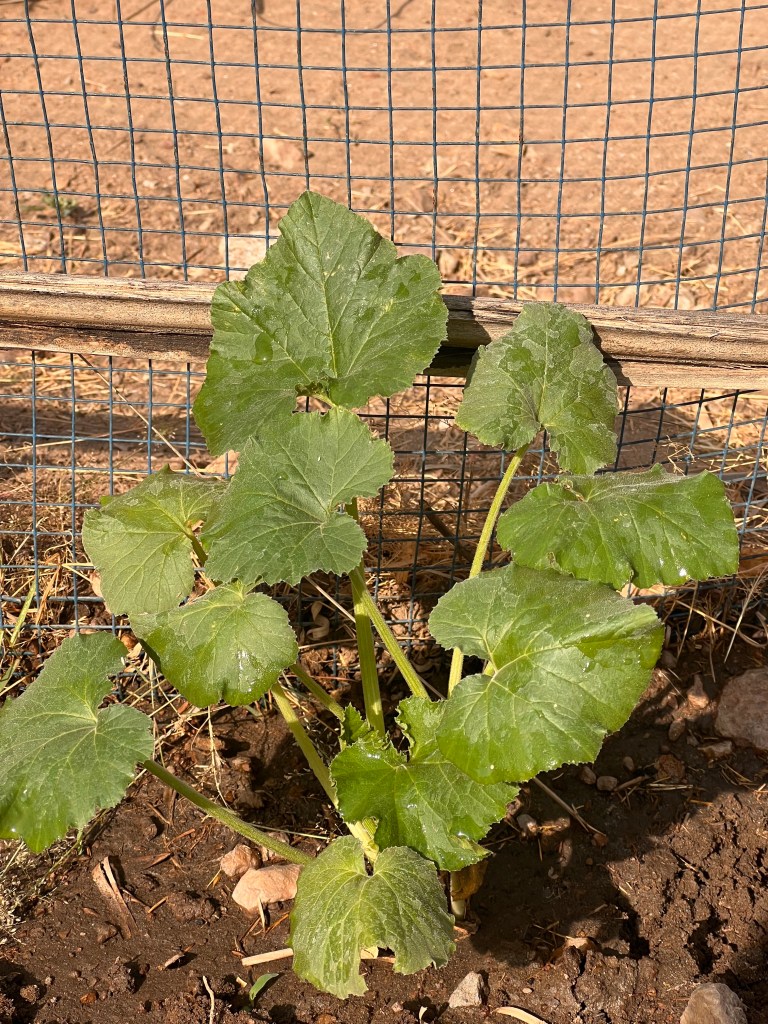
- My zucchini are happily growing! The rest of my garden is small but holding on to life.



 Janet goes places, sees things
Leave a comment