December 8, 2024
Dear Friends & Family,
I am happy to say, I feel very much in the present moment again. I completed sending in my graduate school applications! (Woohoo!) I have until February or March before I begin hearing back from schools, so now I can blissfully forget about the future. Or rather, I can think about the closer future of Togo-based activities. I restarted my garden the day after sending my applications in. It felt great to play in the dirt and stop looking at a computer screen. I also started to get back into the swing of projects at site: I taught about climate change in my agriculture clubs, worked with Jeanette to organize a food transformation trainer to come next week, and began planning out what would be possible to do in the next couple of months.
I have taken some moments to relax. On Friday, Peachey came up to the Awandjelo market so we had a nice catch-up back in our usual bar. I hadn’t actually seen the bar owner in a couple of months with all the traveling I have done. He was as jolly as ever and very happy to see us back. Yesterday, I sat around and read most of the day (Moo by Jane Smiley). When a gaggle of children arrived in the late afternoon, I broke out the art supplies. I enjoy watching the kids here show each other what they can draw on the little chalk boards and puzzle through the sticker-by-number sheets I give them. Kids here have a lot of responsibilities (probably as farm kids do everywhere). And school — even elementary school — is pretty basic: there’s not the music classes, story times, art classes, and special assemblies that were the highlights of my early education. So it’s nice to be able to provide a space for kids to puzzle through new things, be creative, and relax.
I wanted to take some time this week to share a little house tour and describe a bit of my day-to-day life. Erin and Lea have both recently written about their houses. Reading their descriptions, reminded of the sorts of questions I got while home in the US. People were curious about the basic facts of what my house was like, what did I cook, if there was electricity, and the like. If you’re interested, please read on. 🙂 And let me know if there’s something you’re curious about that I haven’t answered.
Otherwise, I want to say thank you to everyone who has donated to my community garden and well project. It means so much to me and my community! We are $464 away from the goal!
I hope everyone is healthy and happy.
Love,
Janet


The House Tour
The village:
I live in a small rural village in the northern area of Togo. There’s just under 3000 people in my town spread out among five neighborhoods. The vast area of my village means sometimes neighborhoods act as their own miniature villages. Most people are part of the Kabye ethnic group but there’s a fairly large Kotokoli population, as well as Lossos, and sedentary Peuhls. We are not on the national highway but one of the roads through our town leads to a quarry so there’s a decent amount of traffic. Besides a few main roads, most folks get around on the footpaths either by walking, biking, or on a motorcycle. There’s a few neighborhood markets where people sell quick meals (such as fried tofu), local beer (tchouk), and sometimes a vendor will pop up with something new: peanuts, soap, used clothing, or other things. There’s a couple of shops that sell pasta, rice, oil, alcohol by the shot, pens, notebooks, and other basics. But there’s no large market.
The homes in my town tend to be very spaced out with fields in between. But some families, such as the chief’s, also have more arable land further out of town. If its large enough people refer to it as a “farm” otherwise its just “the fields.”
The Property:
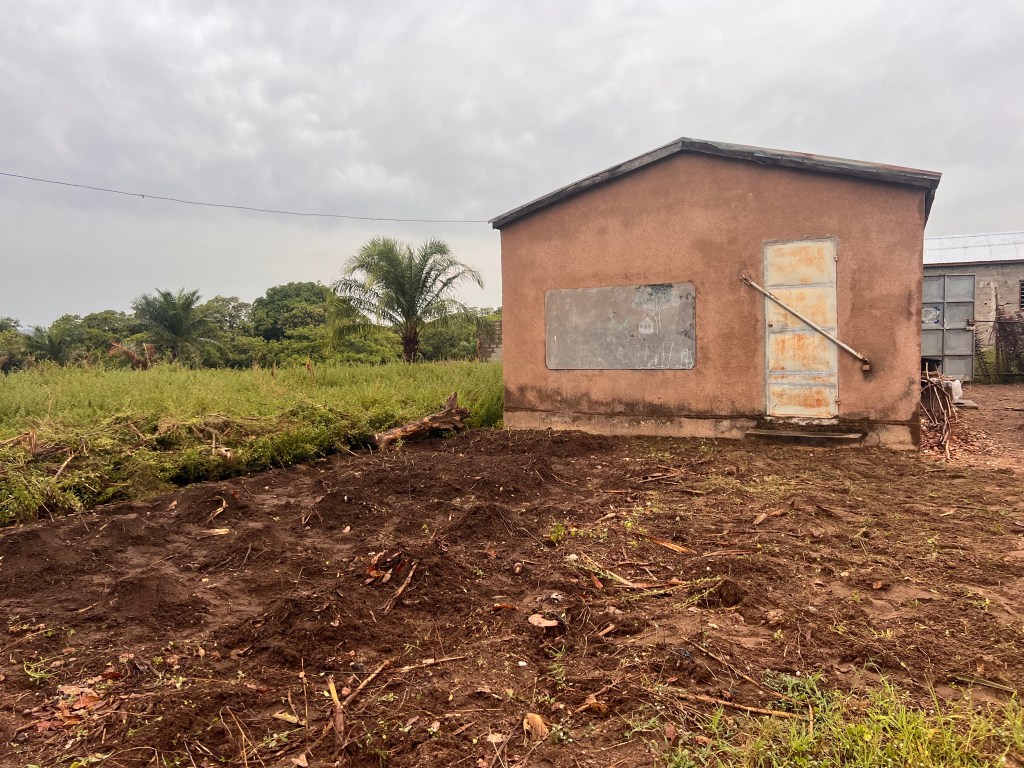
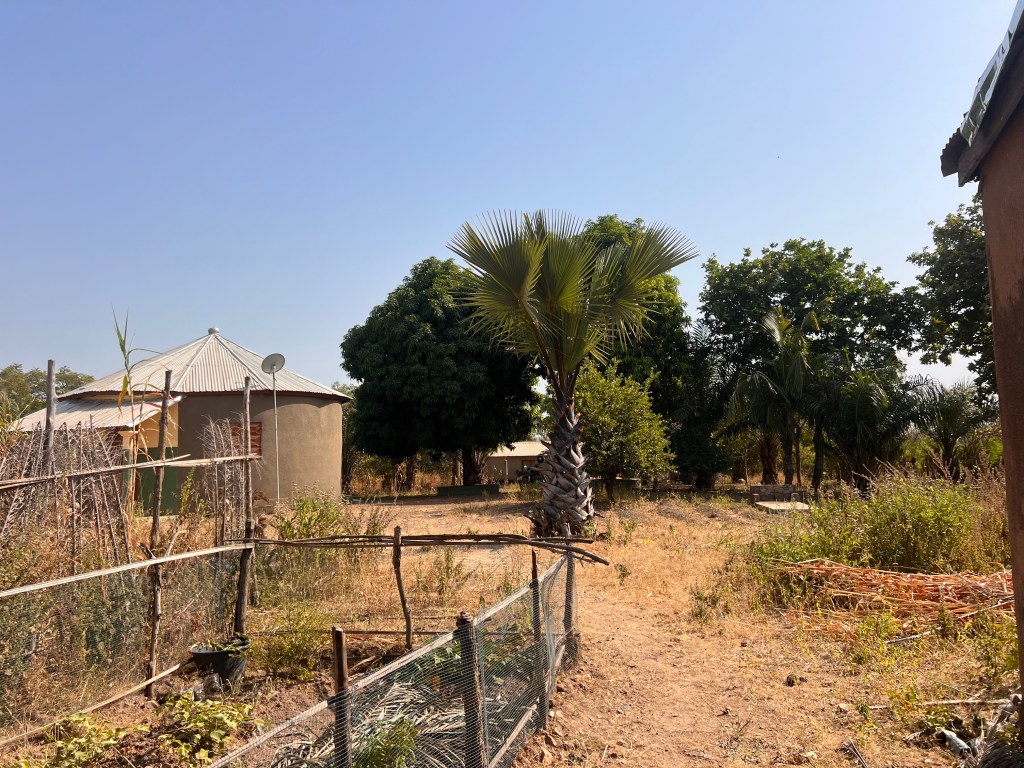
I live on the Village Chief’s property but my house is not part of an enclosed compound. There are four buildings on the property: my house, my host mom’s house, the newly built judgement house, and the Chief’s house, which is the oldest building. The Chief’s house is a more classic Togo house: bedrooms and storage rooms snuggly built right next to each other, several little walled in courtyards, mini round huts for some animals. The judgement house is a large, round, cement structure with a built-in bench along the wall inside. There is also a massive chair (a throne, really) built into the wall. For most of the time I have been here, this has building has been used as storage for cement, iron rebar, and other materials for the hospital building project. It also provides good storage for corn and other grains. The chief recently had a big solar panel and TV installed there. So I think it’s going to soon become what it was really meant to be. For now village meetings and “Judgements” (when the Chief is called to settle disputes between villagers) have taken place under two huge mango trees or in a gazebo-like structure near the Chief’s house.
Next to the property is a huge new house built by the Chief’s family members who live in Europe and the US. Many Togolese dream of immigrating to Europe, the US, and Canada for work. There are simply barely any jobs in Togo. For those who secure a visa and leave, they send money back as soon as they can. For many, its a point of pride to build a house. Sometimes its described as a retirement house: some place to move back to Togo in. Although, I am unsure how many Togolese abroad get the chance (or, eventually, want to) move back full time. (The Fixer by Charles Piot is a great book that looks into this whole phenomenon). The big new house next to mine had been under construction through most of my time here. About a year ago, the family made a big effort to finish the roof and doors so that visitors coming for the ceremonies of January and February had places to stay in. Now, Maman Jacobo, the Chief’s sister, has recently moved her and the kids into one of the rooms in the new building. So, the chief’s family property has nearly doubled in size with the addition of the house.
My House:
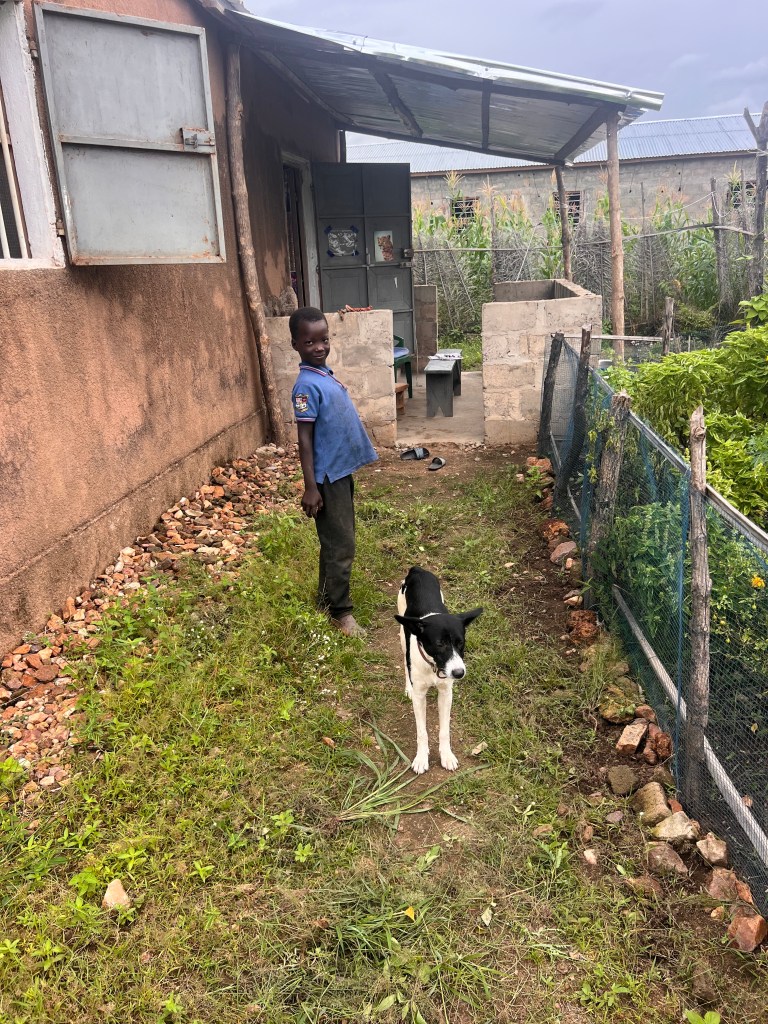
My house is large, probably one of the largest of the Peace Corps houses. I have three rooms: a living room and kitchen combination, a bedroom, and a small room I use for storage and a barebones yoga studio. Recently I added a walled patio with a roof off of the front door. The patio is almost like another room now, which is useful since the inside can get quite hot in the middle of the day.
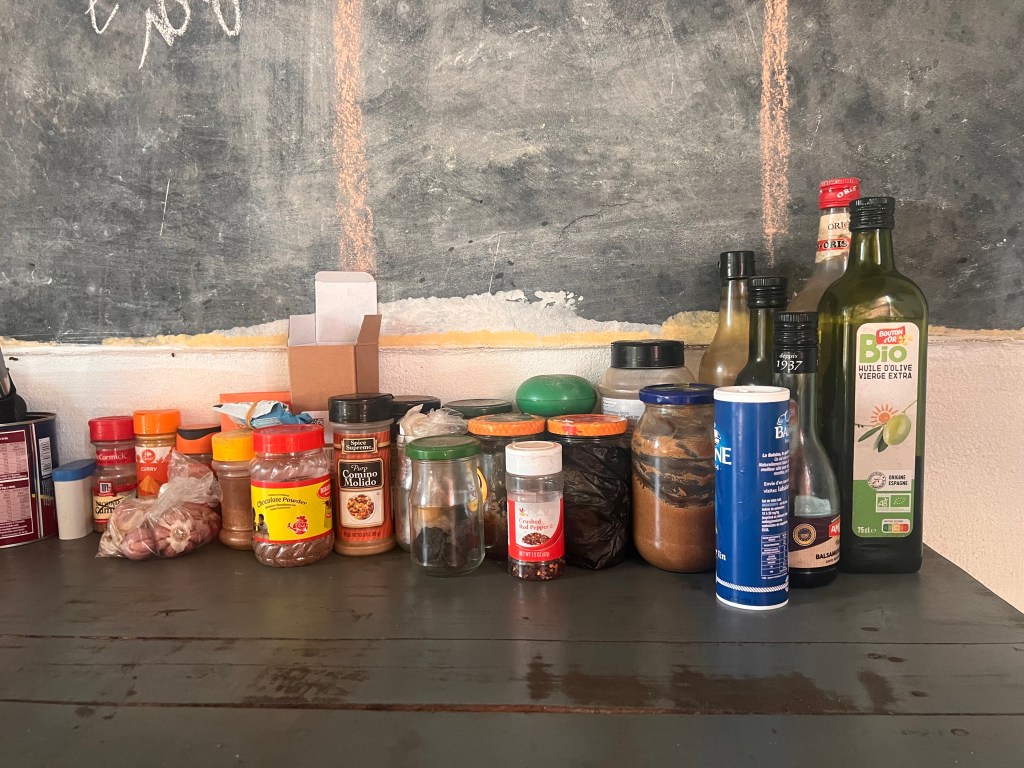
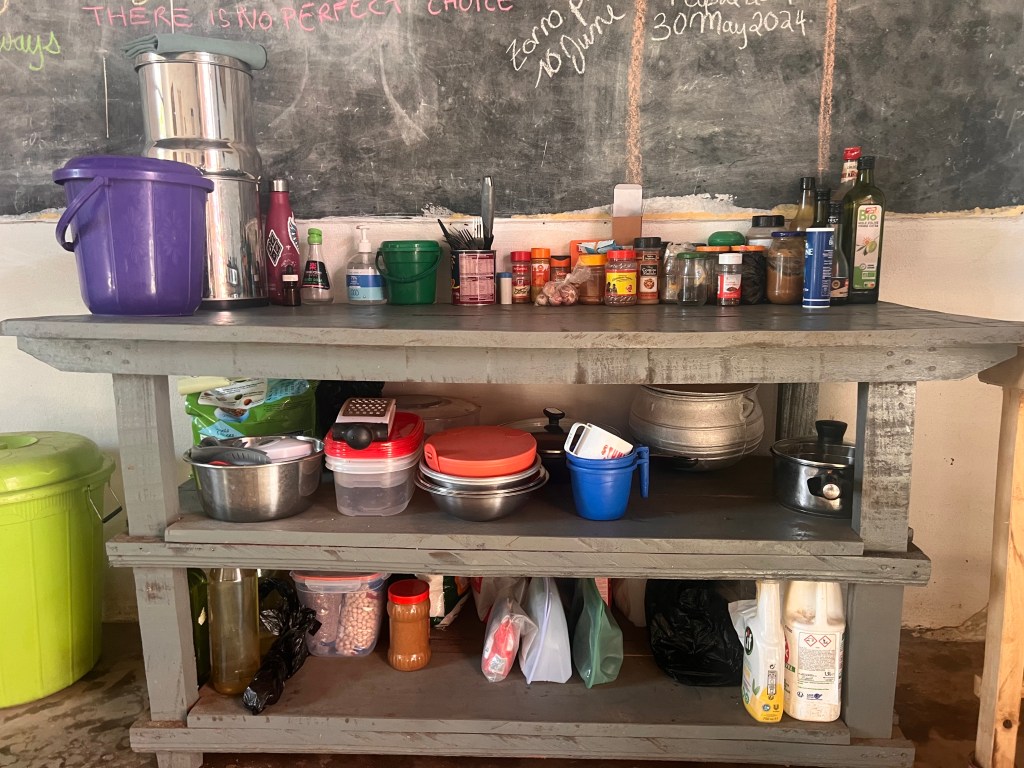
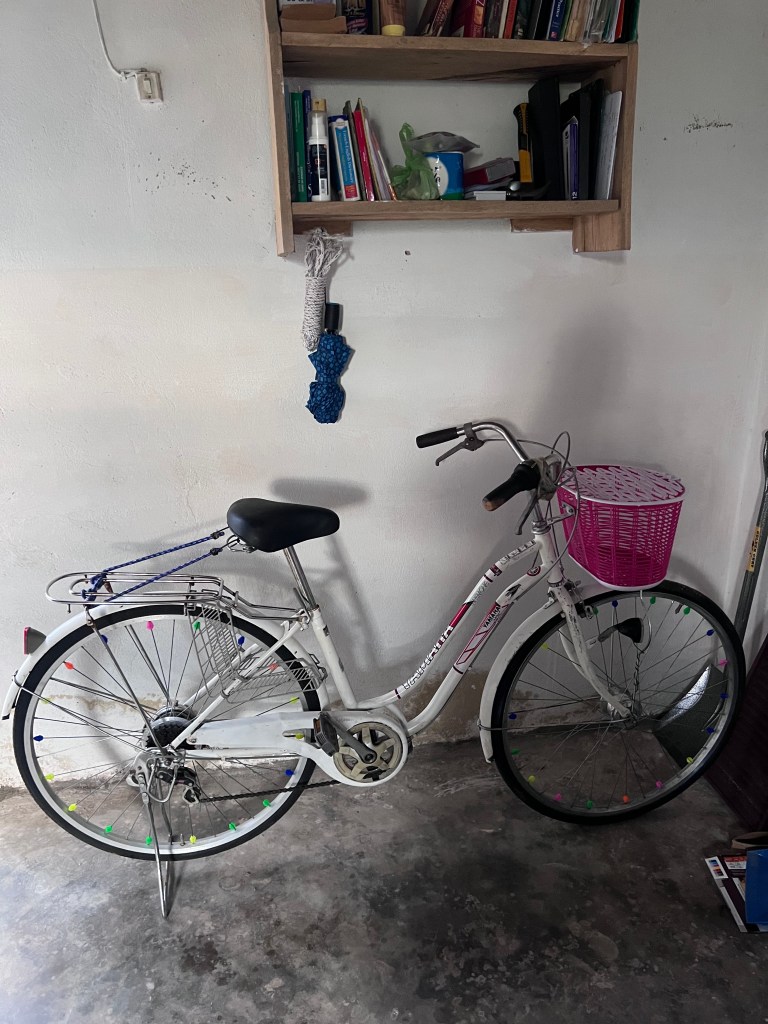
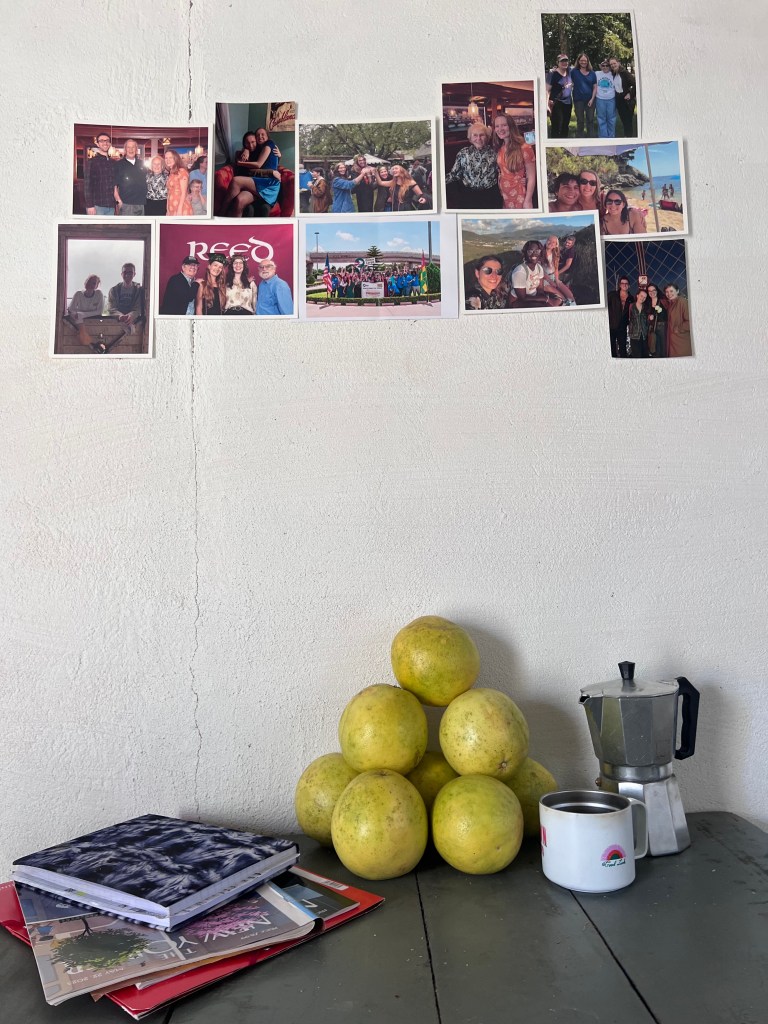
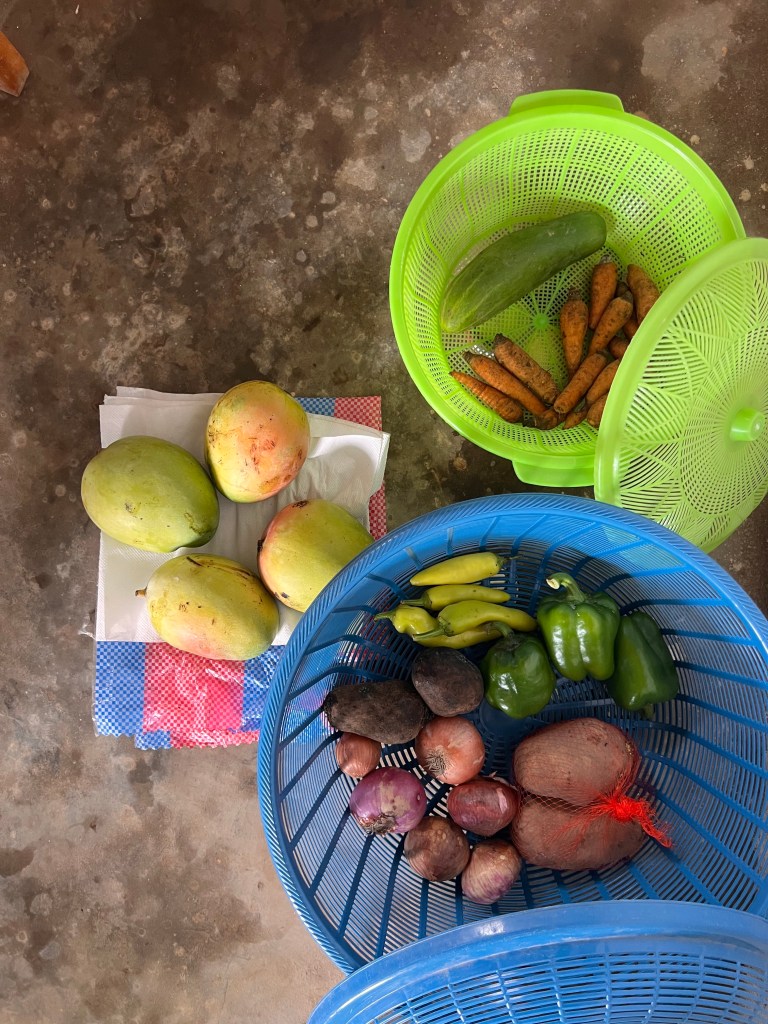
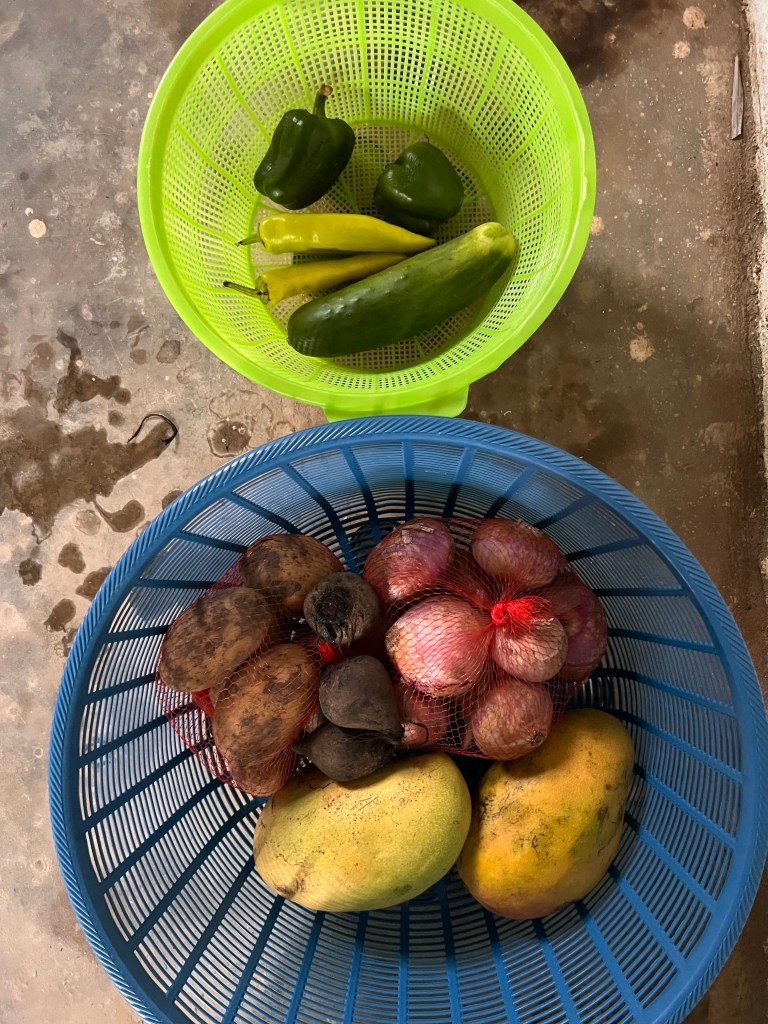
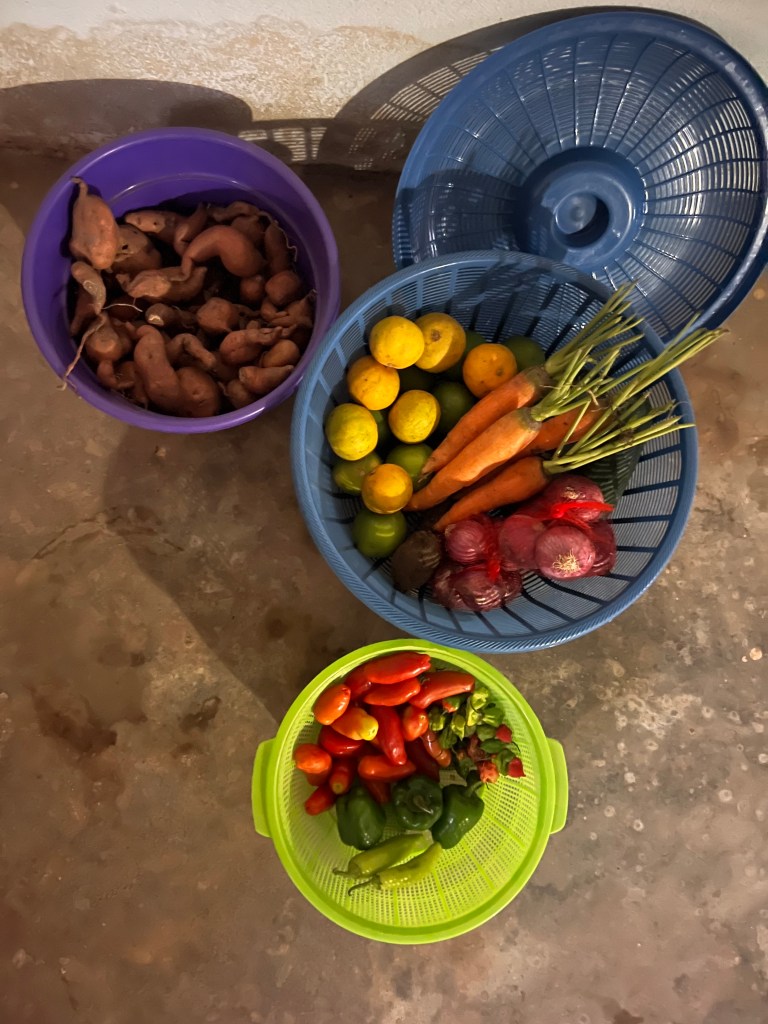
Living for two years in this house is the most settled I have been since our little blue house in Portland. I would love to say that I have made it really nice. But other than some photos on the wall and a large chalkboard for decorations, it is pretty utilitarian. But I am proud of little tricks I have come up with to improve the functionality. There is no chance of a fridge for me. But I have found by placing my fruit and vegetables in baskets (lifted off the floor just a bit by tomato paste tins) next to my water barrel they can keep cool enough to last the week between markets. I have a system for lining up my filtered and bleached water in neat rows underneath the water filter. The house came with a bed, a couple of shelves, some rows of hooks, and a small coffee table. The furniture I added is simple: a long high table for a kitchen counter, a small dining table (also works as my writing desk), a long wooden bench, a small short stool, and four plastic chairs. The investment in my kitchen counter was great: all my dishes, dry goods, and cleaning supplies fit neatly inside. In my bedroom, I use a tall book shelf and my packing cubes to make a dresser and vanity combo. My bicycle fits squarely to one side of the door and I can tuck my broom, washboard, and gardening tools behind it. I do have room for a couch and maybe some other luxuries, but they were not my first priority and, as time continued, I found them not necessary. I have a nice mat that I can roll out and place some pillows on when I want to lounge.
My latrine and shower area are a little cement outhouse in a private area next to my house. The house is fenced in and the front yard is largely occupied by my garden. I feel lucky to have a comfortable and secure house. Some volunteers are right in the middle of a tight compound. And while sometimes, I can imagine closer relationships with my host family through this kind of proximity, I value the privacy and the ability to choose who is in my space.





Electric:
My village does not have electrical power. All the towns along the highway are connected to some grid, but we are far enough off the highway it has not been installed here. There’s hope that the construction of the hospital will encourage the government to install electrical power. I have not been able to discover the source of energy nor how the decision to put a town (or certain buildings in the town) on the grid is made. Families usually have small solar panels to charge their phones. Flashlights, small electric lamps, and cooking fires are the options for nighttime illumination.
I have a version of in-home power. There is a decent sized solar panel on my west-facing roof which is wired to two bulbs (one in my bedroom, one in the living room) and a battery (it looks like a car battery). For a while I had an inverter which could charge devices at 20 watts, but a few months ago, in a puff of smoke and acrid smell, it died. I chose not to replace it. I have a clamp-on USB charger which works well and does not make me nervous about electrical fires and ruining my devices’ batteries like the cheap inverter did. I have a camping solar panel that I place on the east-facing roof in the mornings. I tend to just charge my three power banks rather than my phone, kindle, and computer directly.
It took me a long time to figure out a good routine for getting everything charged. During rainy season, my first solar panel battery was weakening, so I spent a stressful week struggling to get my phone to stay above 10%. I was shocked to learn that these batteries only tend to last six months. I’m not sure how anyone can afford to keep replacing them. And the thought of battery acid sitting in some trash pit was disturbing.
Water:
I get my water from a borehole hand pump well. Walking to the well, pumping eleven liters of water, and carrying it on my head home takes about ten minutes. Out of Peace Corps Volunteers, I think I have one of the longest walks to my water source. But of the people in my village, it is quite close. Grown women and many girls are carrying basins of at least thirty five-liters for much longer distances than I do. They are trained up from a young age. One of the cutest things to see is a mom carrying a basin of water followed by her children, each successively younger one carrying a smaller and smaller container of water. Toddlers proudly carry their little water bottles back home to help out. There’s friendly camaraderie at the water pump. Women help each other lift the basins on to each other’s heads. Children take pride in helping their elders and guests pump water. (Also, I think bouncing up and down while pumping the water can be a bit of fun for them).
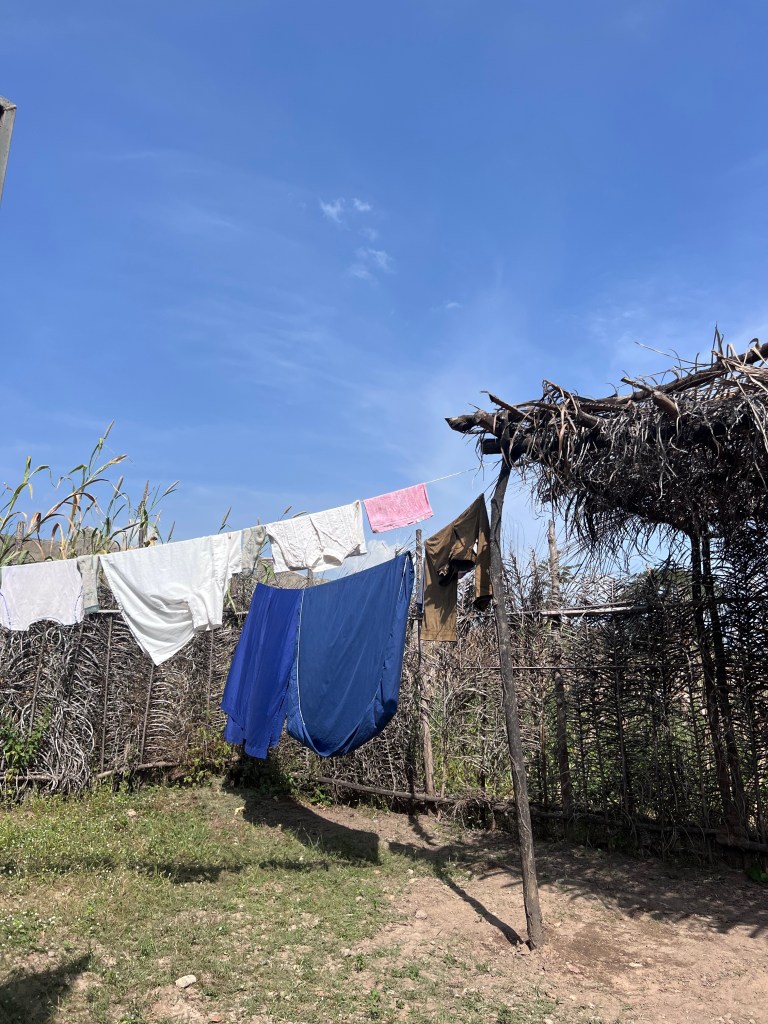
During the rainy season I collected water off the eaves of my roof and so pumped just a couple of buckets a day on average. In the dry season, especially when I am gardening, I can spend at least an hour of my day collecting water. Doing a full week’s worth of laundry can take between forty and eighty liters of water. During the rainy season, I do laundry after a big storm. In the dry season the labor is a lot more demanding. I do dishes every couple of days and I think that takes around fifteen liters of water. I use about seven to ten liters to shower, depending on if I am washing my hair or not. Bucket showers are pretty simple: you use a cup to pour water over yourself, you suds up, and you rinse off again. Washing hair takes a good amount of work to comb through shampoo and conditioner and rinse thoroughly. I always take advantage of a hotel stay to wash my hair.


Food:
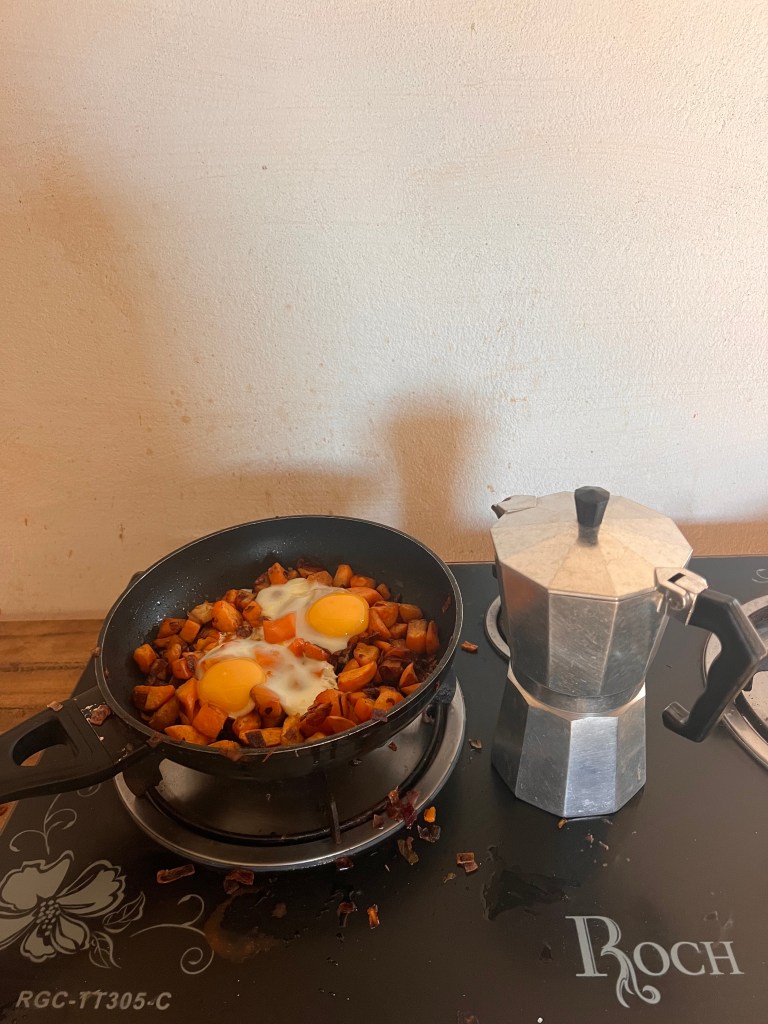
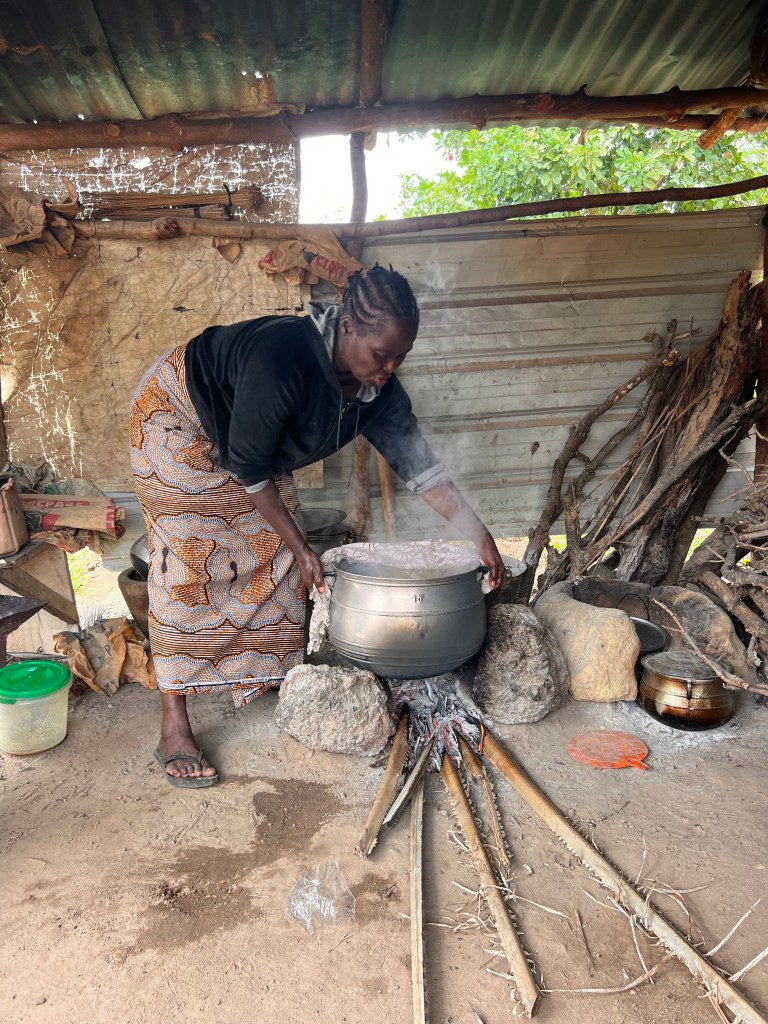
I cook breakfast and lunch for myself and my host mom brings me dinner each night. I have a three-burner gas stove. My host mom uses a three-stone stove wood fire. Usually she has a couple of fires going at once.
When my garden is in full swing, I can eat lots of food directly from it. But there’s always a bit more I need so I go to market. About six kilometers away from village, is Awandjelo which has a large market every Friday. There’s lots of good vegetables, often seasonal fruit, and all the other necessities of life. I usually buy a bunch of vegetables, eggs, and sometimes bread or a roll of the local cheese. Depending on the time of year, keeping produce fresh can be tricky. I often eat in order of rot-ability. (For example, I make tomato-based meals early in the week.) I enjoy market day! I bump into lots of people I know, my vegetable seller tests out my Kabye, and I usually meet up with other volunteers in the area.
I am also close to Kara, a regional capitol. It takes about forty-five minutes by motorcycle to get into the heart of it. There is a grocery store in Kara and several markets. From the supermarket I get Zorro’s kibble, olive oil, coffee, soy sauce, vegetable bullion, milk powder, and oatmeal. Sometimes I’ll splurge on Oreos, fancy granola, or other treats. One time, I bought a small pack of sliced cheese, three little slabs of butter (like you get at restaurants for dinner rolls) and rushed home to make a grilled cheese. These days though, the grocery store has ceased to have the magical quality it had when we first discovered it. I am still grateful for it — olive oil instead of mystery vegetable oil, and real coffee instead of instant are much gentler on my stomach. Kara’s markets often have nicer looking vegetables and more variety than my local market. So if I am in town, I usually pick up some produce as well.
One of my main jobs as an agriculture volunteer is help people learn about and access a nutrient-rich diet for themselves and their families. Even with all my privileges — money to pay for motorcylcle rides to and from various markets, time to work in my garden, enough money to buy lots of vegetables and things like milk powder — eating healthily takes a lot of time and mental energy. One of Peace Corps’ tenants is to live among the people you serve, immersed in the same way of life. Of course, as an organization they also know they need to keep us alive and healthy. So it is not 100% immersion. But I do think, if you want to fight against food insecurity it is very important to understand, to whatever degree possible, the many of the challenges people face in accessing or producing, then preparing food.
***
I hope these descriptions give you a bit of insight into my daily life. All in all, I feel I have a very lucky life. Keeping food fresh is a bit tricky, but talk about farm-to-table eating! I have a safe home surrounded by people that watch out for me. Compared to my friends in village, I have a lot of little luxuries. Each house for Peace Corps is different — most people have electricity and nearly all that do have a mini fridge. But many houses are smaller than mine and lack a degree of privacy. I have enjoyed fixing up my house in the last six months and hope that the next volunteer who lives in my town will get to do even more to it.
If you’re curious about anything else, please let me know!
 Janet goes places, sees things
Leave a comment