
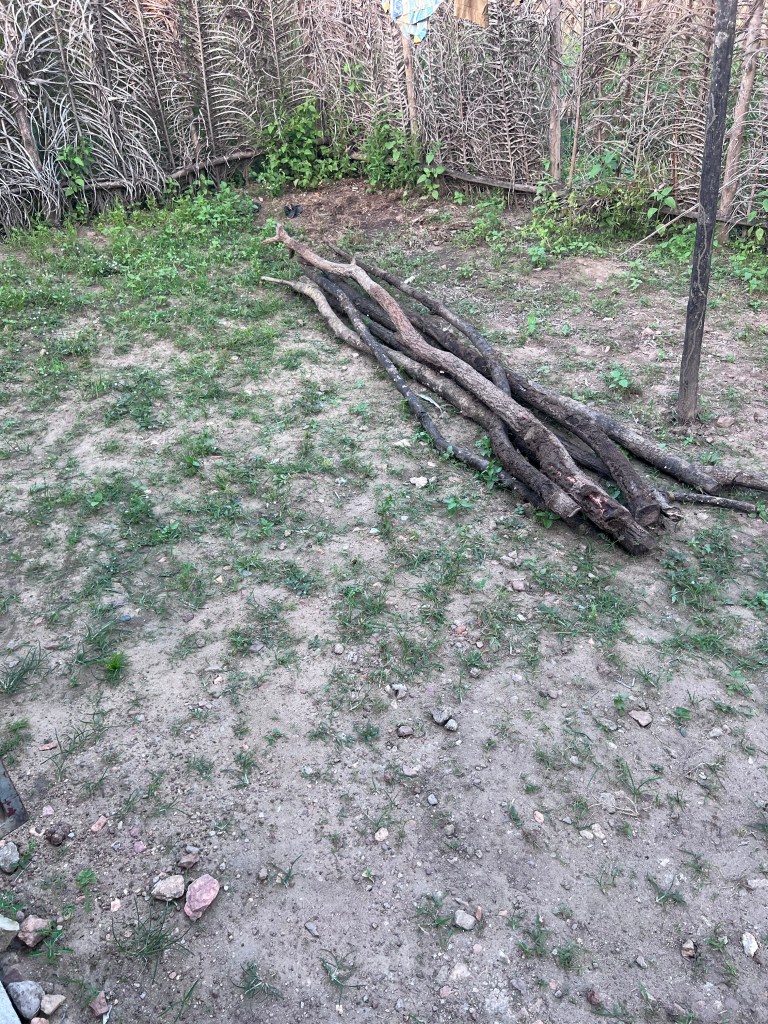
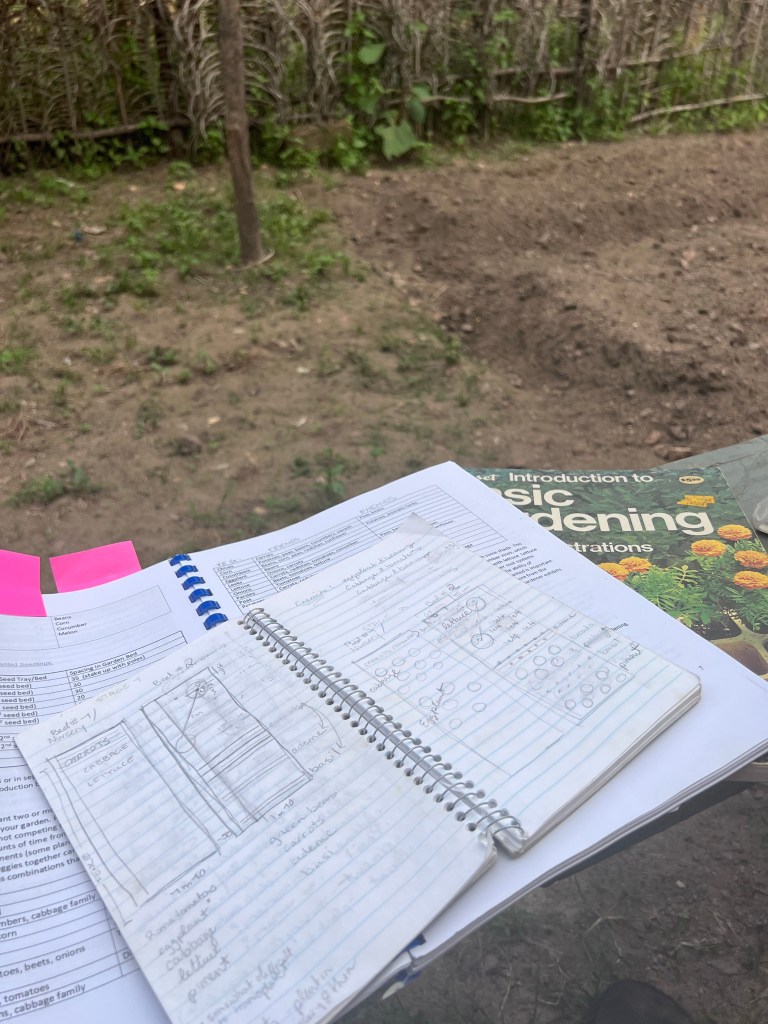
Since my arrival to site in early September I kept thinking about starting a garden. I was reading about gardens, asking people if there were any gardens in town, considering possible Peace Corps projects. In early October, after a few sluggish do-nothing days, I looked out at my yard and decided to start digging. I was eager to feel productive, to develop a routine, and to do something physical.
Other than the urge to play in the dirt, I had professional intentions for starting a garden. The first was to learn more about gardening here: the possibilities and limits of the climate, the quality of soil, the access to water, the rate of growth, the available materials, and what could grow here. When visiting markets, I had been surprised to see an abundance of cabbage and carrots throughout — two vegetables I considered winter or cool weather vegetables. There could be some gardening surprises ahead! But when I had talked to people in my village about gardening (or lack thereof), the number one concern was water. Togo is a tropical country, but the further north you go (which is also further from the ocean) the more arid the land. And, within my community in particular, access to water is a challenge. There is no running water in anyone’s home. There is a river, wells, and pumps. Pumps go further into the ground, and are therefore both more reliable and more expensive to build. The river and wells often dry up during the dry season (around October/November through April/May), which is exactly when people would choose to garden. During the rainy season, there’s too much work in the staple crop fields to consider gardening. The Committee for Village Development (a bit like Town Hall, or a mini Mayor’s office) has been working hard to continue to apply for financing for more water pumps. Until more pumps are ubiquitous, folks have to go further and further afield for water as the season progresses. (Some women walk a kilometer or more back from a pump with a 40 liter basin of water on their head multiple times a day. If a family has a motorcycle, sometimes a moto is used to go to the pump and collect jugs of water. It’s tiring and time consuming work). My own water source is a ten- to fifteen-minute round trip from my house (including pumping the water).
Before encouraging anyone else to begin a garden under these conditions, I started my own. I now have a sense of the amount of daily work and the amount of water needed. I’ve been able to experiment with techniques for efficient water use, and I have a few more I’d like to try later on. I’ve encountered pests, and battled them (although my green beans did lose the first wave of attack).
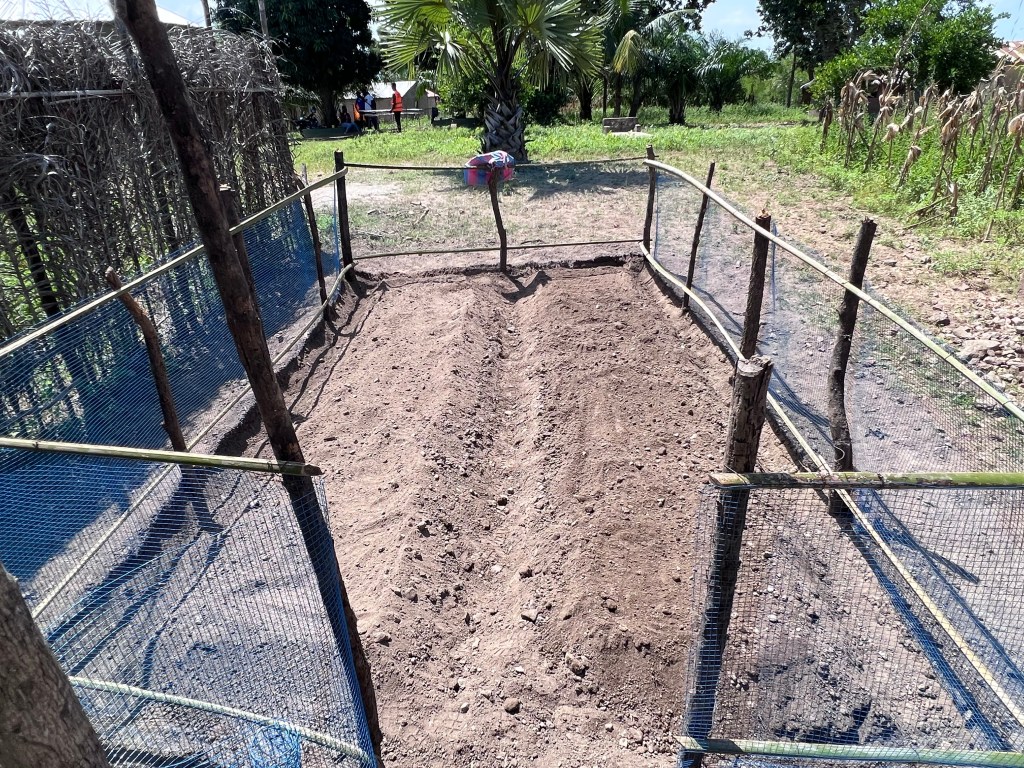
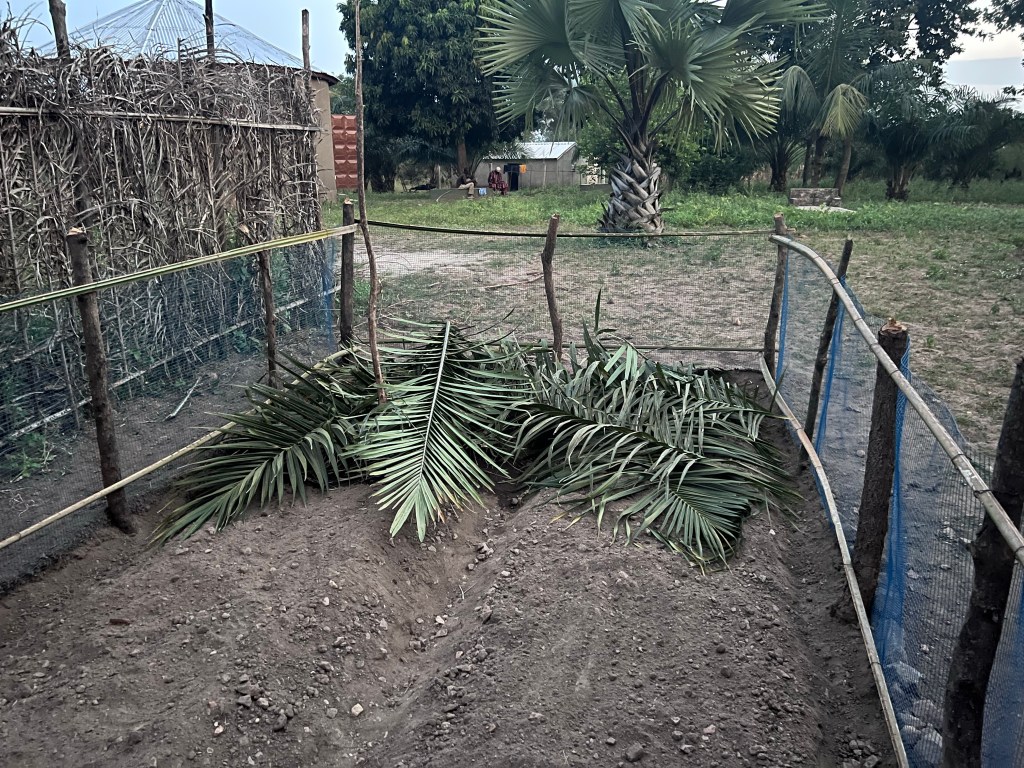
My second goal was to talk to people about gardening. That’s why I plopped the garden right in the middle of my front yard. I wanted to be able to socialize and build connections — which I find easier to do through shared activity. I wanted to talk about the possibility and benefits of home gardening here. A direct example of home gardening sparks the conversation; and when language barriers is a challenge, walking through a garden and pointing things out becomes the conversation.
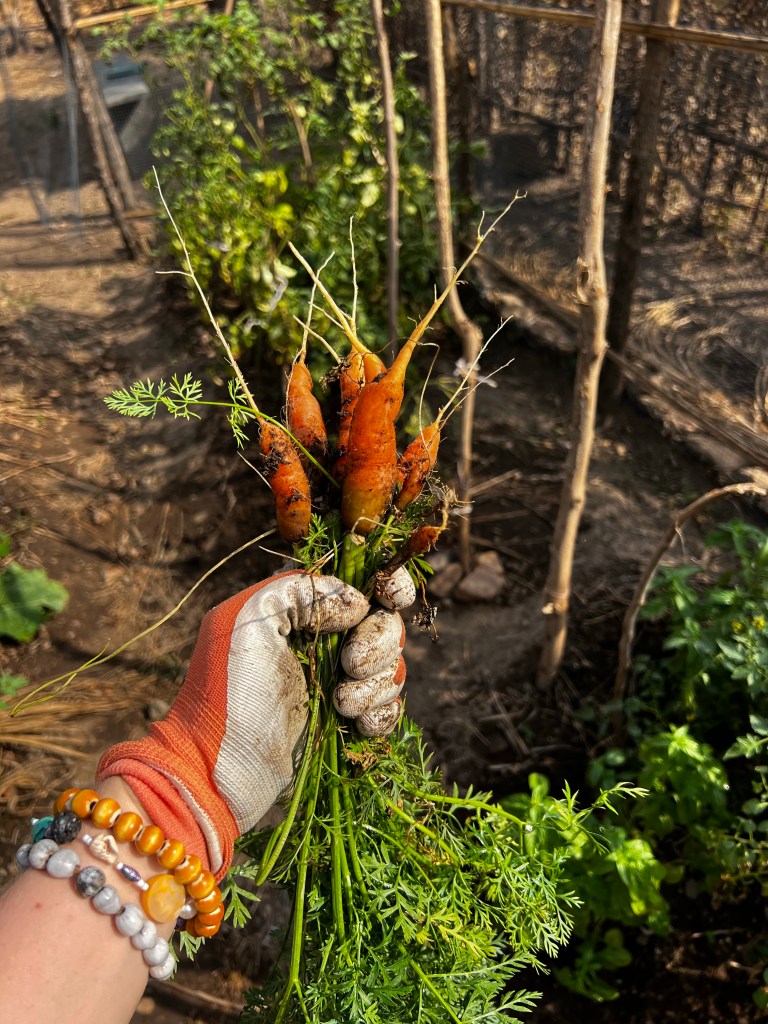
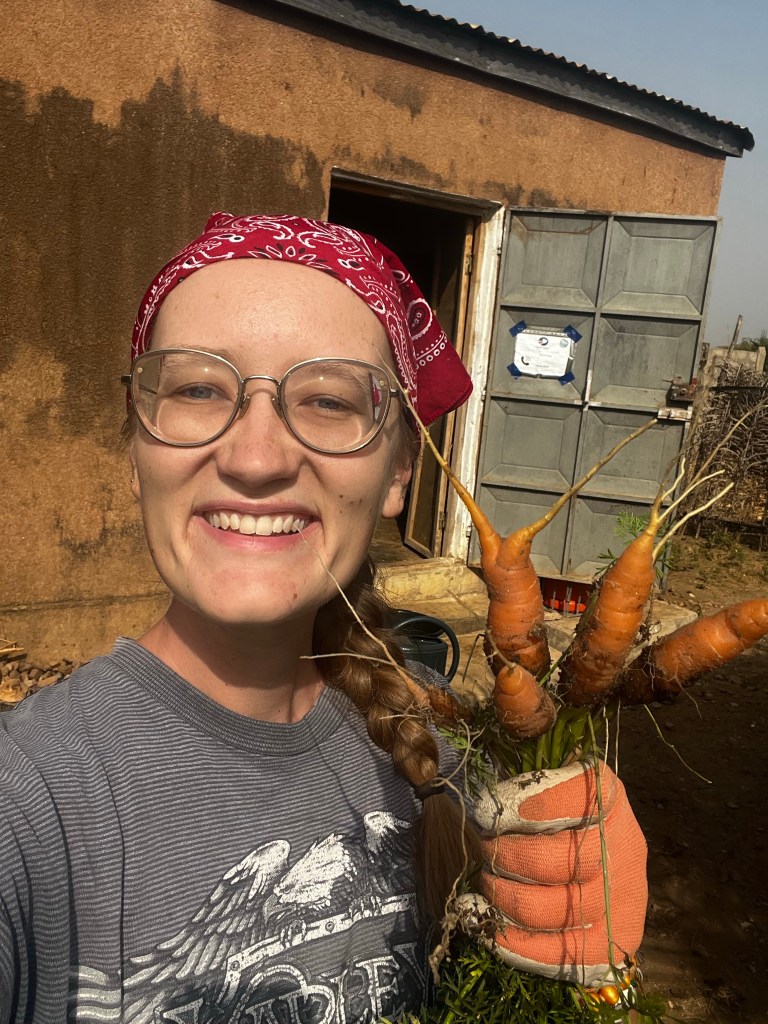
Chatting over the garden fence is now part of daily life. It has allowed me to remind people that my job here includes promoting gardening and helping people start their own. As an added bonus, it has shown people that I am capable of working hard. I’ve shown my commitment to being here by investing my time and energy into the land. And at least two gardens have started in town! My friend, Kapo, and his cousin have each started a garden. I’ve happily passed on a few tomato and eggplant plants to their plots. Soon, hopefully very soon, I will begin a school garden with my students. Yesterday, I ate the first carrots from my patch, and this morning I gifted the chef a few carrots straight out of the dirt. As my plants continue to mature, I’ll continue to gift produce and spread the gardening bug.











I often find myself telling people, “I love to cook because I love to eat.” Now, I’ll extend it through to “I love to garden, because I love to cook, because I love to eat.” Although each process alone is immensely satisfying, the complete trinity is even better.

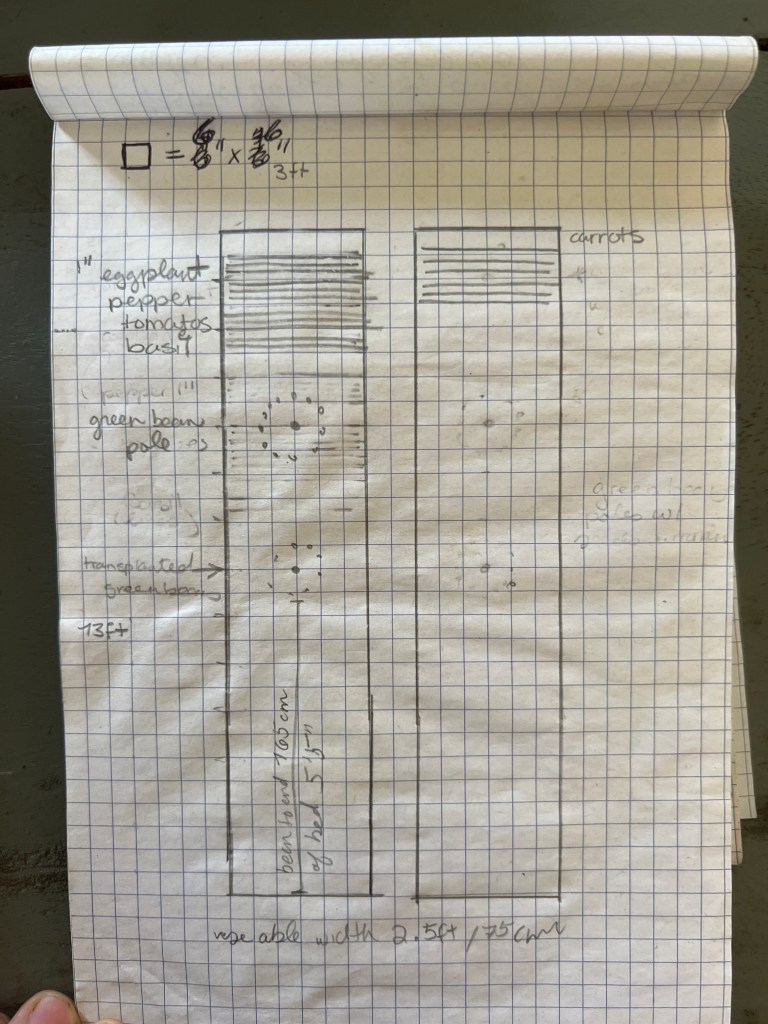
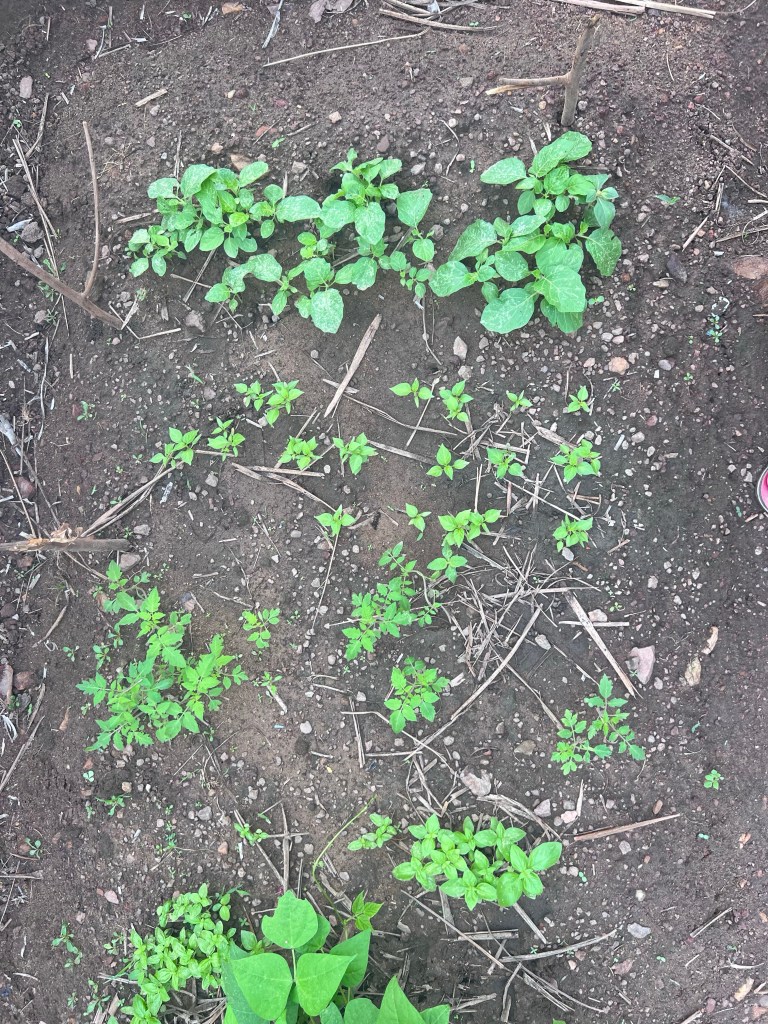
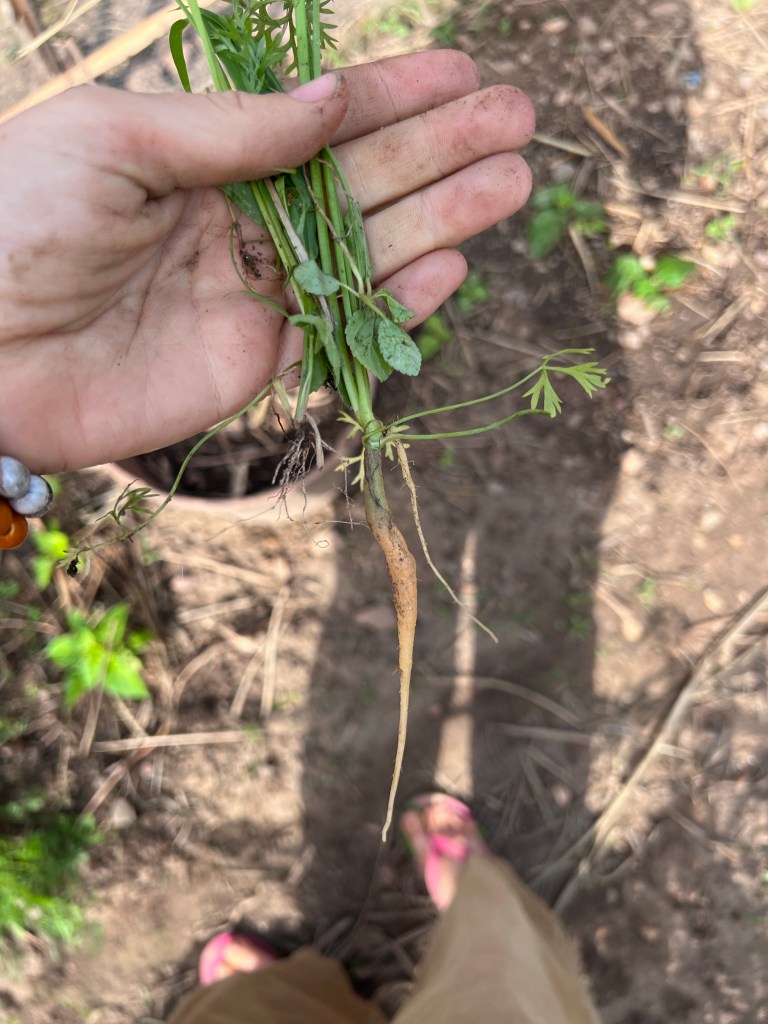
Carrots have been a satisfying project. They don’t take too much work. Ive had to learn to be brave and firm with myself while thinning them out. It just feels like a waste, but I know it’s necessary. I hope the carrots will also work to keep the soil a little looser for the future.

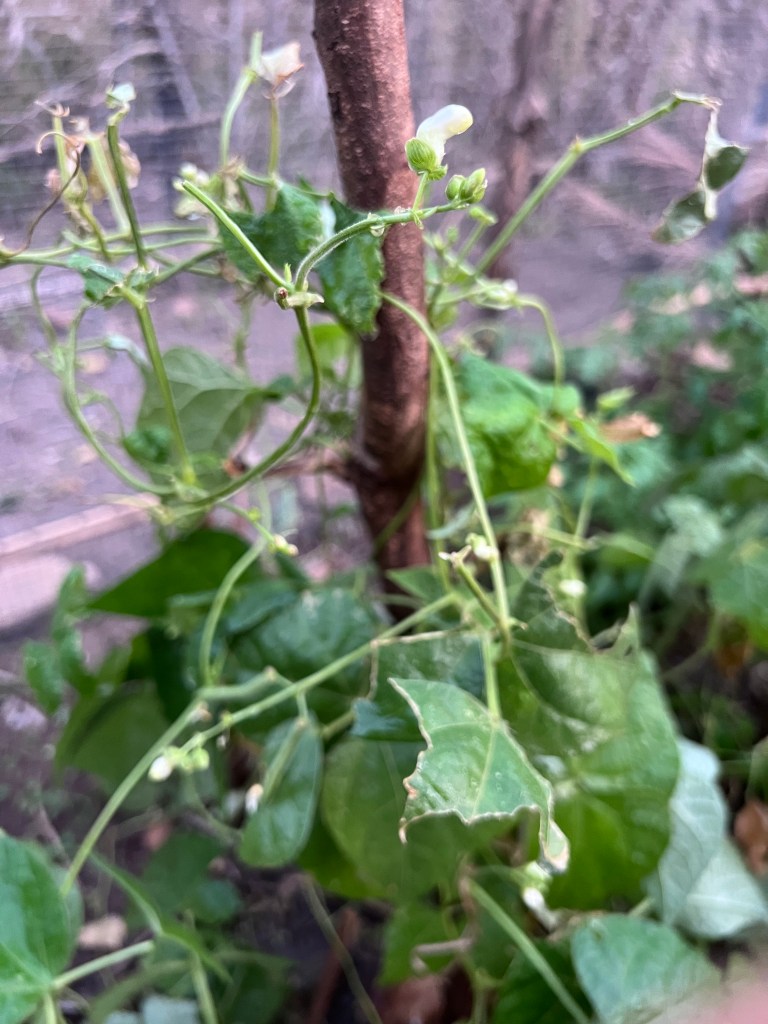
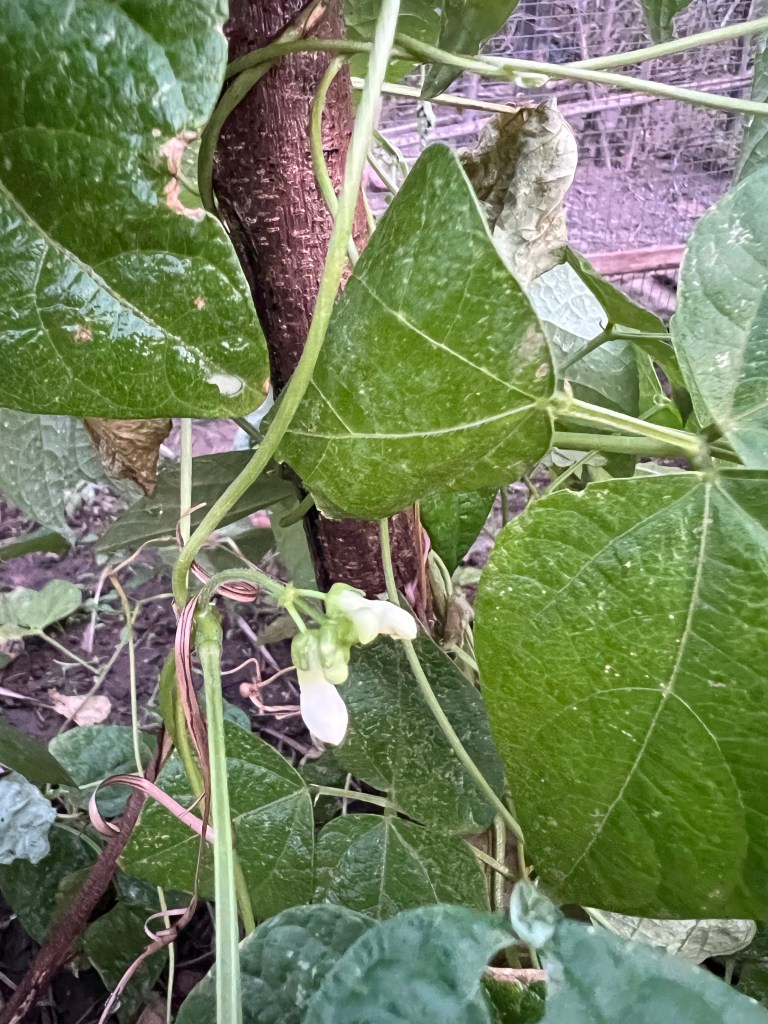


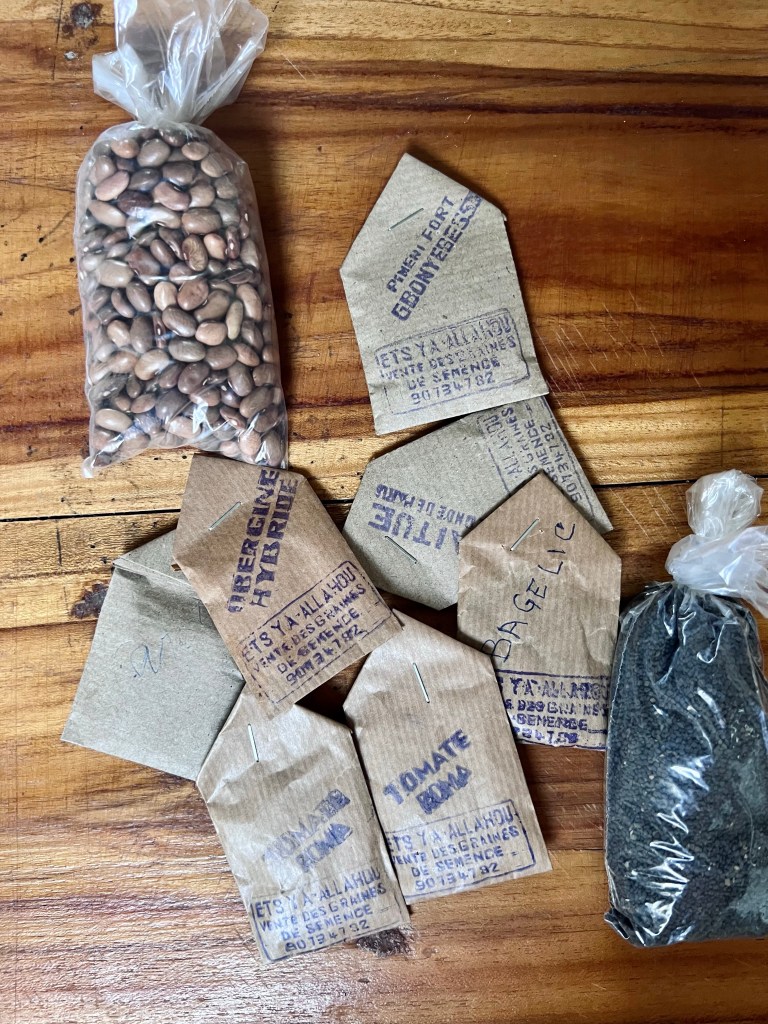
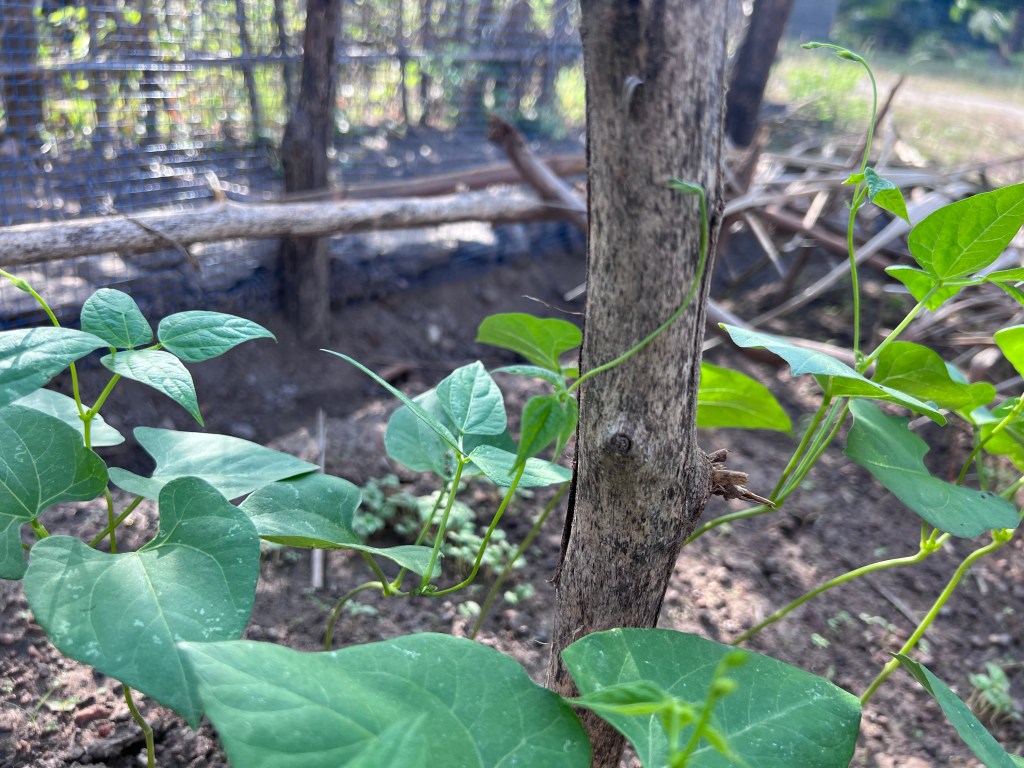
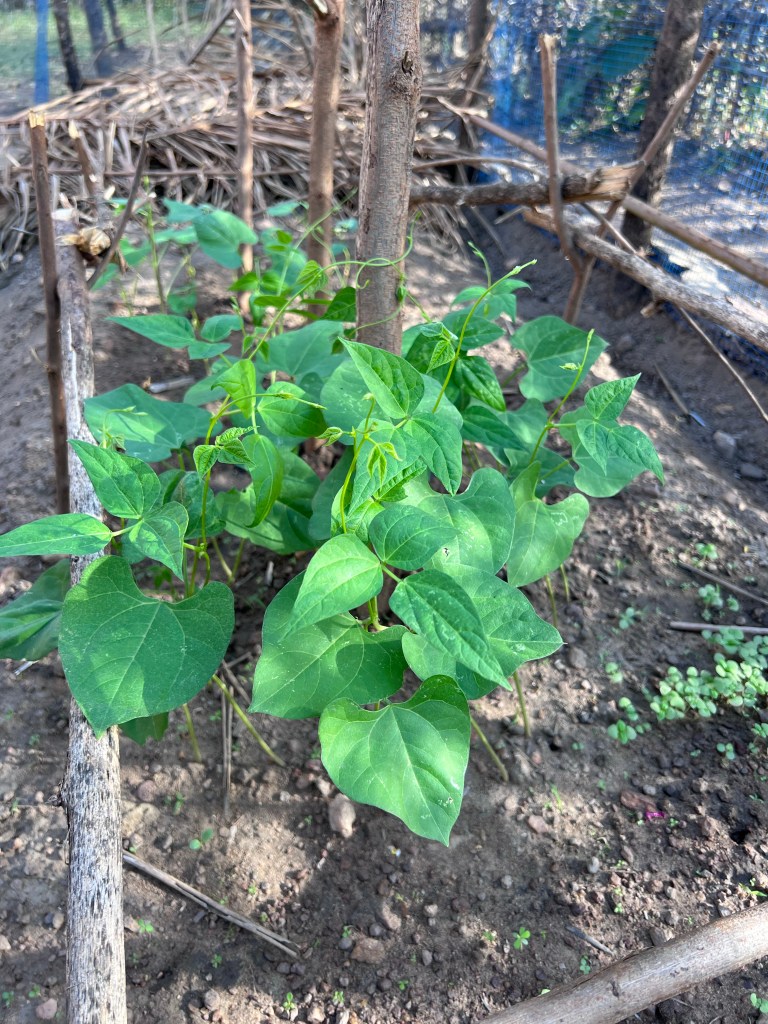
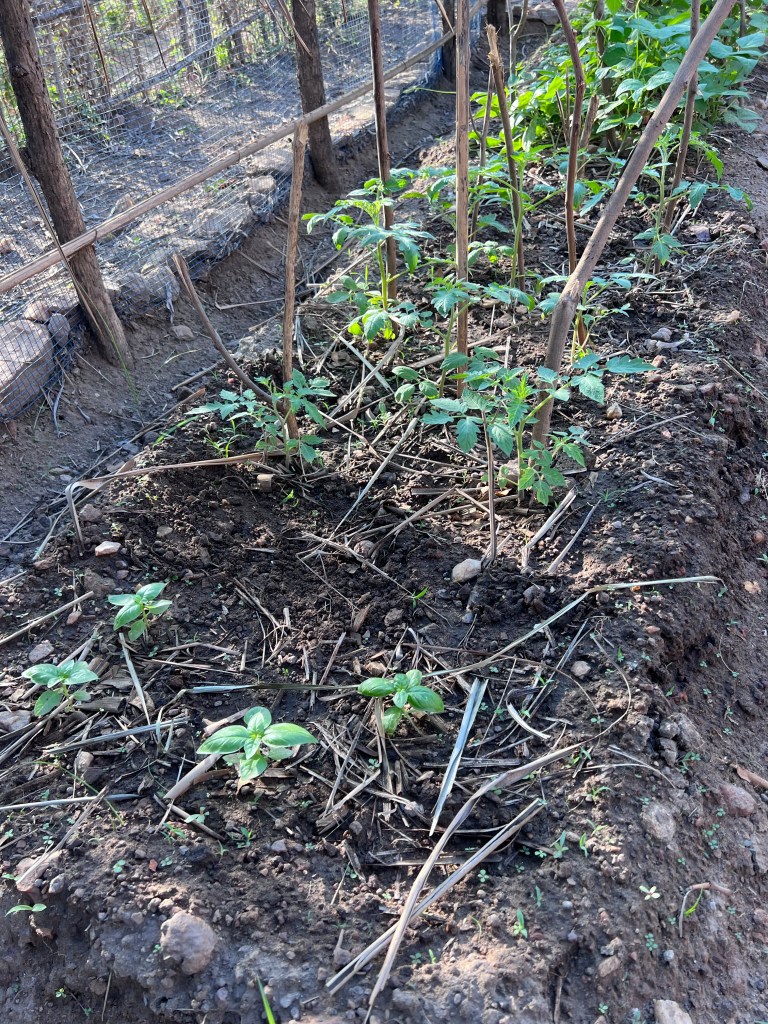
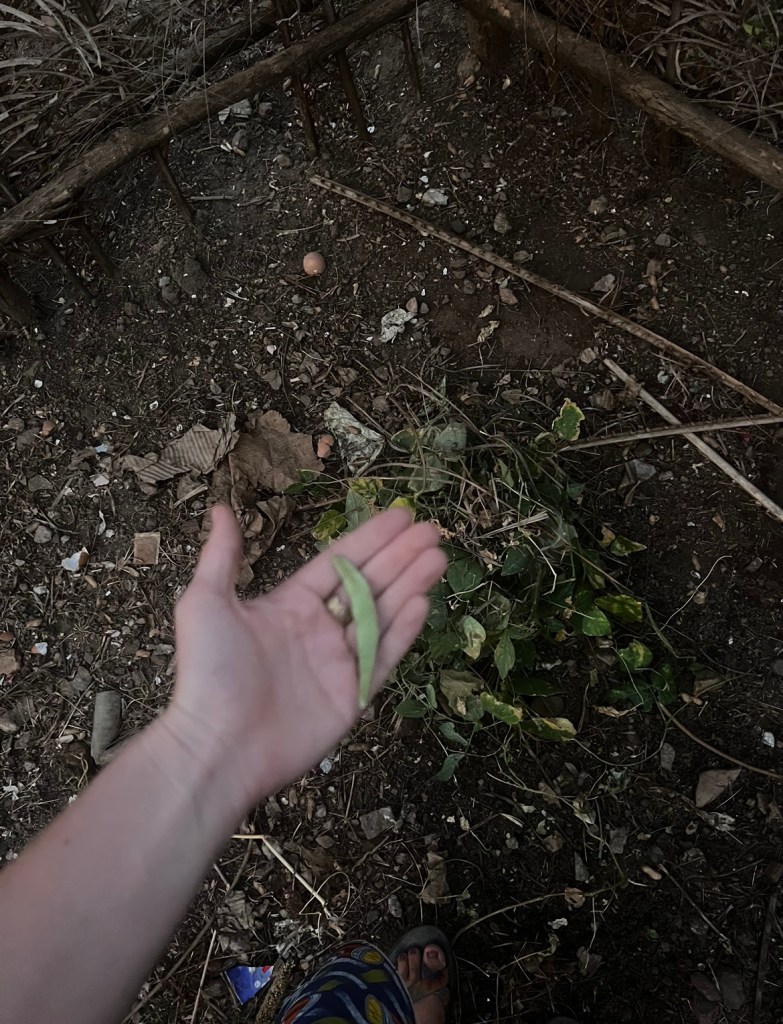
My green beans were thrilling at first: they sprouted so quickly and climbed so fast. I planted too many around the poles because I assumed some wouldn’t take. Soon I was overwhelmed with vines. I left town in mid-December for a Peace Corps training and a short Christmas vacation after. I had noticed a few clouds of small white bugs at night around the beans before I left. But in the rush of preparing for training and wrapping up classes, I did not treat the beans with anything. When I returned to town, I was happily surprised to see how huge my plants were: tomatoes were tall and bushy, my eggplants had enormous leaves, and carrot stems were standing up straight and tall. But my bean leaves were going yellow and hardly climbing their poles. I removed sick looking leaves and was pleased to see a few bean pods. But the tendrils dried up and leaves kept yellowing. The bean pods were the plants last shot at reproduction before she died. Eventually, I faced the music and pulled up what was left of the bean stalks. Ultimately, I’m not sure if it was aphids or some sort of fungal issue. The chicken manure I applied near the tomatoes (next to the beans) might have caused an overabundance of nitrogeon which attracted certain insects. Or there could have been some other residual problem in the soil, or some green bean specific issue. Whatever it was, leaving the beans to slowly die could harm the other plants and was using up valuable real estate.

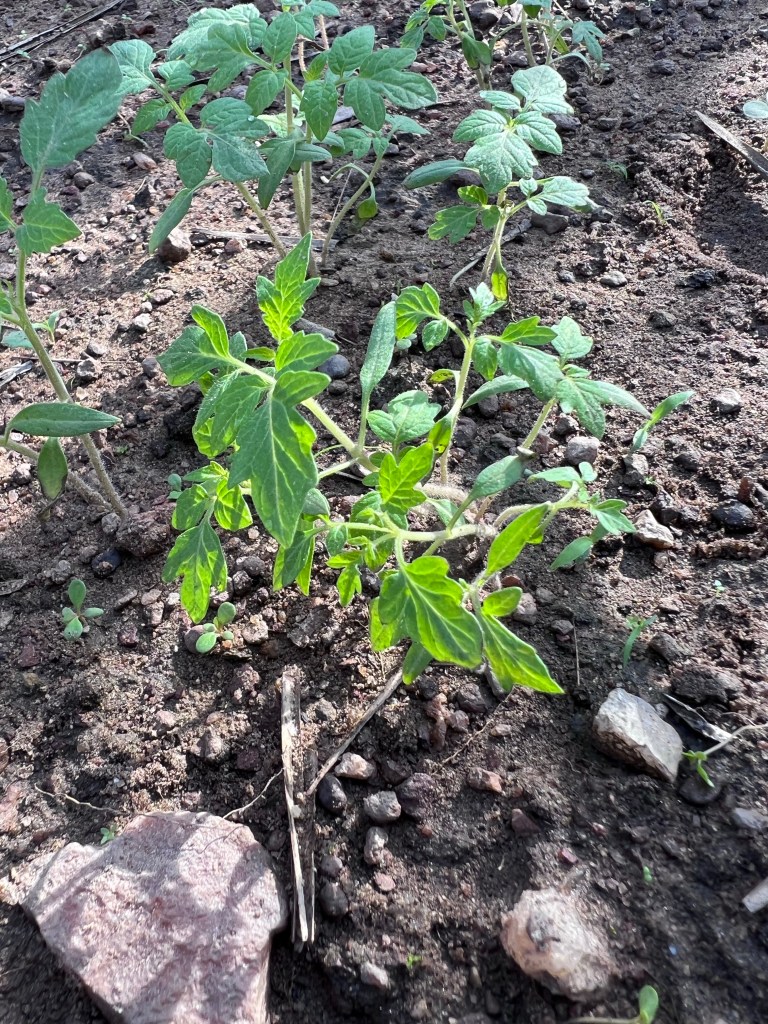
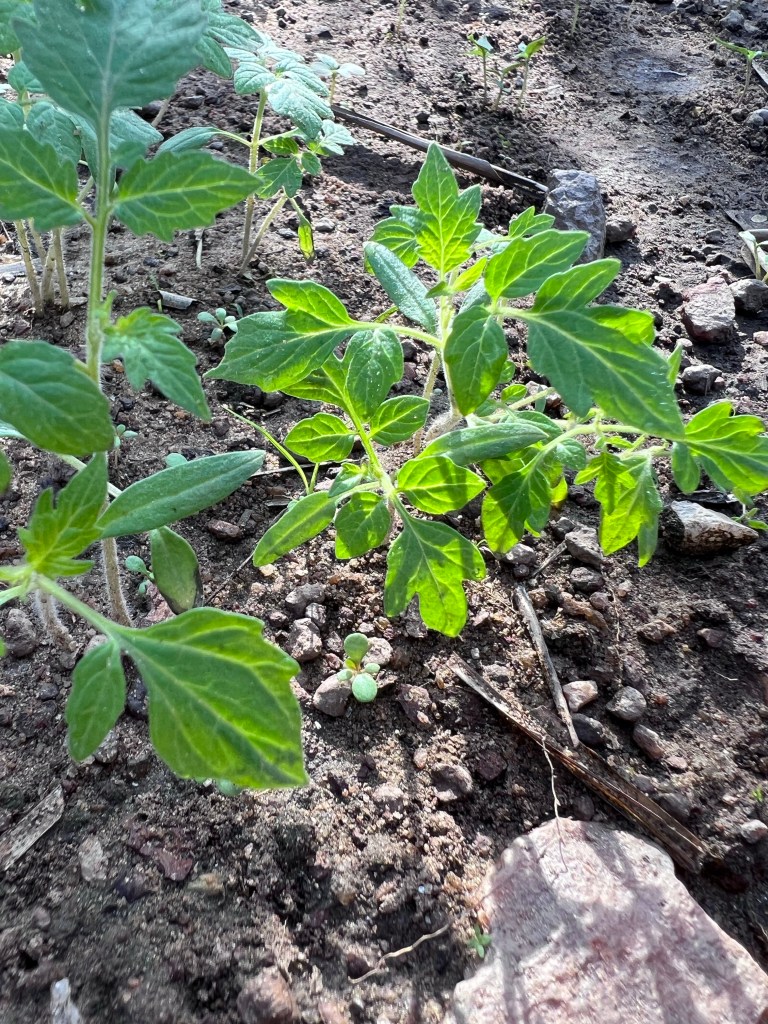
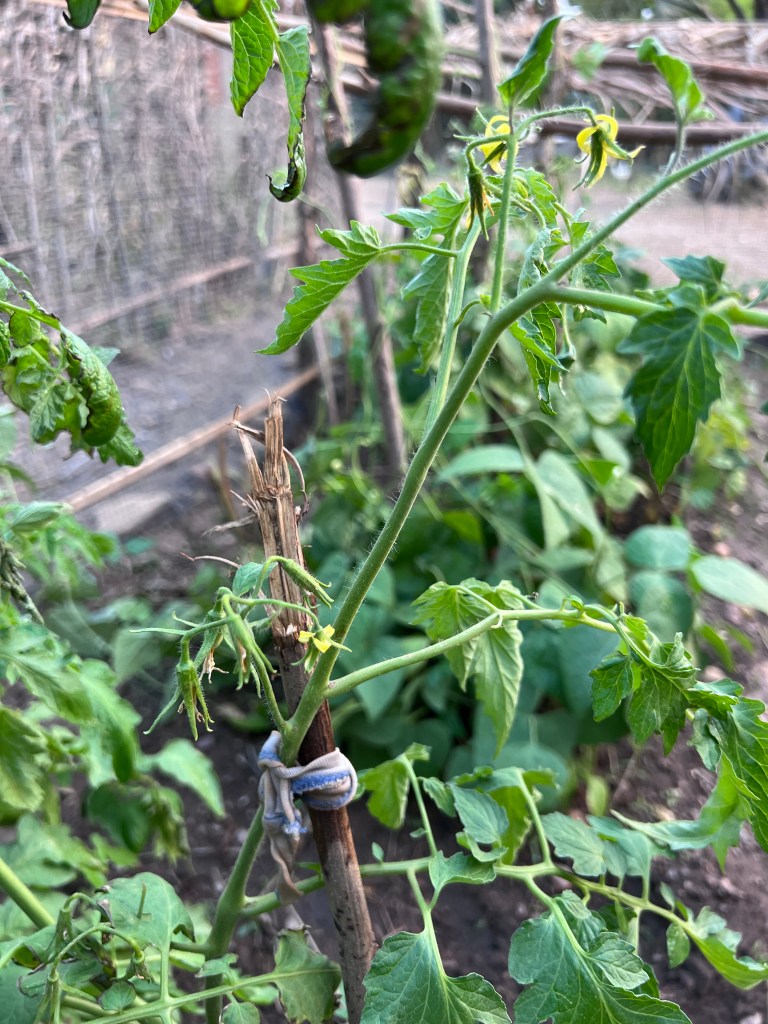
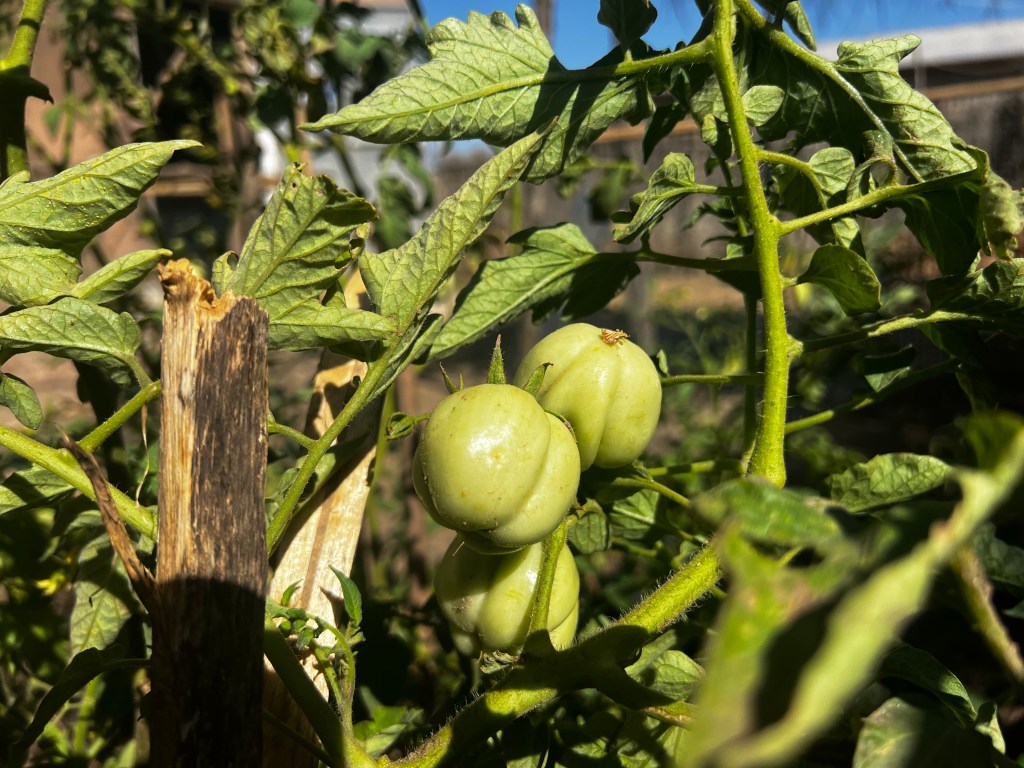
So far, tomatoes have had a happier story!


Eggplant and peppers have been taking their sweet time, but the first flowers have begun!


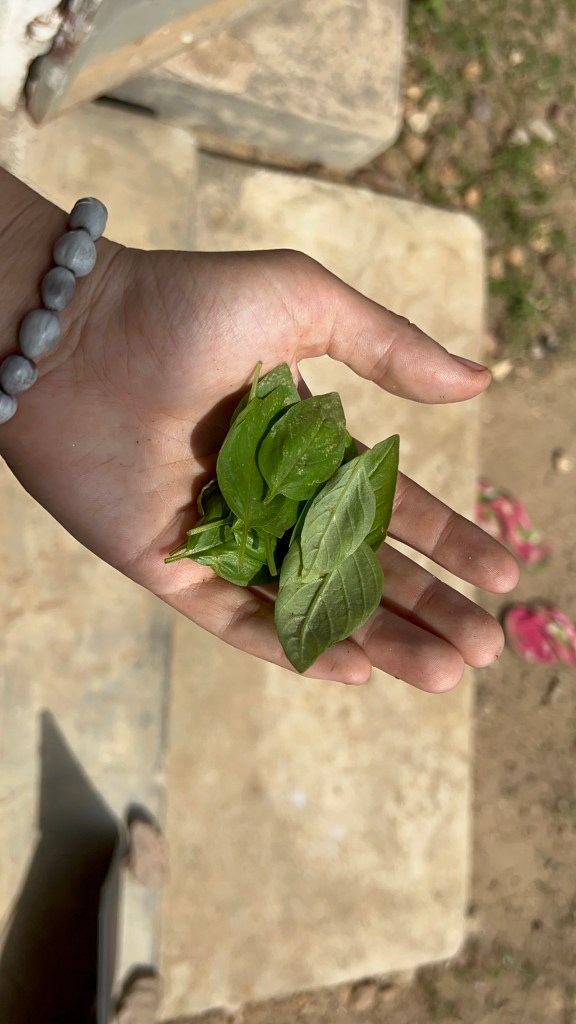
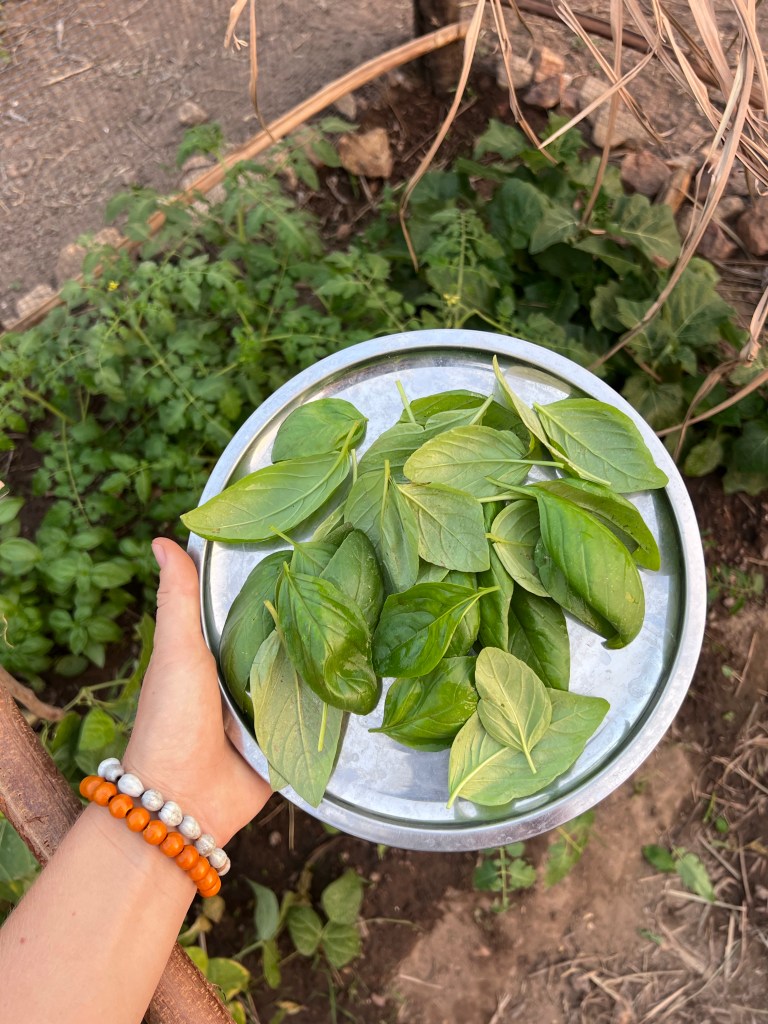
The basil is doing wonderfully — soaking up the African sun and making me a happy pesto-eating girl!



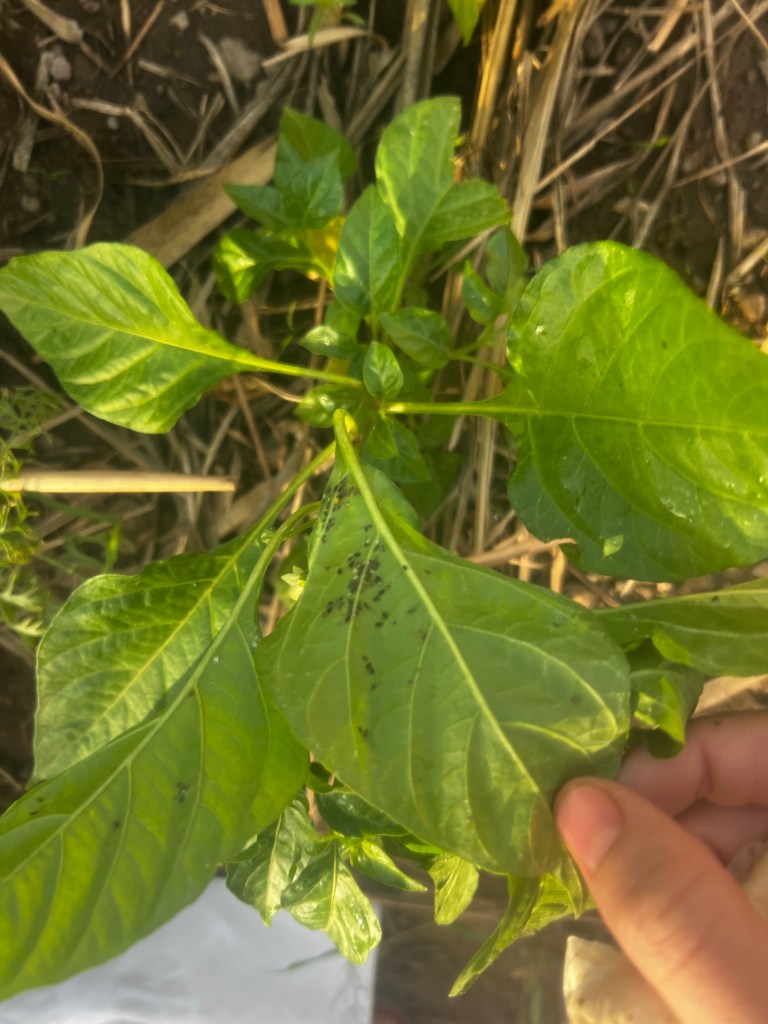
Little black bugs (aphids?) arrived on my eggplant and peppers a couple weeks ago. Luckily this time, I was home at the beginning of the arrival. I’ve been wiping down the leaves with slightly soapy water and picking off the bugs where ever I can. Luckily this seems to have stopped them, but I may attempt a neem seed or neem leaf treatment as an organic insecticide soon. Caterpillars have arrived a couple times too and I have just picked ’em up and squished them. (I’m getting really tough). Overall, I think my companion planting strategies have helped keep bugs down. And since I have a small garden, the labor-intensive combat strategies (like cleaning each leaf) are do-able for me.


Beyond my work, the garden has been wonderful for me personally. I’ve developed a real love for it. When I’m working in my garden, I enter into a kind of meditative state. The state reminds me of the calming effect of swimming, where all that exists is the water and my movement through it. In this version, all that exists is the plants. I’ve fallen asleep with images of tomato leaves imprinted on my eyelids. Living in a foreign country, living within multiple foreign languages, never quite sure of what’s happening around me, but trying to create connection and an impact through all of it, creates a near constant onslaught of thoughts, feelings, reactions, and questions. But when I enter the garden, my vision narrows to the weeds to be taken out, the growths to be pruned, the leaves to be checked — there’s only plants, water, and soil. Any thoughts beyond the garden that might slip in, slide out easily. And after the work, the other challenges of the day are simple.
Wishing everyone well! – J
 Janet goes places, sees things
Leave a comment